Some Interpretations of Creation as Told in Genesis
Readers of the Torah might come to question why the elements of the story, especially in the chapters devoted to Creation and the first men and women, came to be written in the way it was. These events took place before history, even as history is understood in the Torah. Though God alone created everything, the question begs of itself, who created God? History did not begin with God’s creation, nor with the appearance of Adam and Eve and their first two children, Cain and Abel. The Creation stands apart both in kind and placement. History, such as it is in the Torah, begins with the genealogies of Cain and Seth provided in the 5th chapter of Genesis, and not with Creation. Furthermore, the description of Creation wasn’t created out of whole cloth. The Editor rearranged the elements of earlier Creation stories in order to weave the particular story he wanted to tell.
Either production of the universe starts from nothing as the Torah describes or procreation that involves a female and a male. The Torah proposes the first version and the other sources from Sumeria and Babylonia, for instance, recount the second. It is not the purpose of this essay to choose one version over the other. The literature and the people, the Jews, that arose because of the Torah, is proof that what the Editor wrought was right and good. Rather to show that the Editor of the Torah, so-called in imitation of the Homer who wrote the Iliad and the Odyssey, edited the creation story of Genesis in order to assert that the One God created everything ex-nihilo.
Below are the first two days of creation in Hebrew with the vowels.
בְּרֵאשִׁ֖ית בָּרָ֣א אֱלֹהִ֑ים אֵ֥ת הַשָּׁמַ֖יִם וְאֵ֥ת הָאָֽרֶץ׃
וְהָאָ֗רֶץ הָיְתָ֥ה תֹ֙הוּ֙ וָבֹ֔הוּ וְחֹ֖שֶׁךְ עַל־פְּנֵ֣י תְה֑וֹם וְר֣וּחַ אֱלֹהִ֔ים מְרַחֶ֖פֶת עַל־פְּנֵ֥י הַמָּֽיִם׃
וַיֹּ֥אמֶר אֱלֹהִ֖ים יְהִ֣י א֑וֹר וַֽיְהִי־אֽוֹר׃
וַיַּ֧רְא אֱלֹהִ֛ים אֶת־הָא֖וֹר כִּי־ט֑וֹב וַיַּבְדֵּ֣ל אֱלֹהִ֔ים בֵּ֥ין הָא֖וֹר וּבֵ֥ין הַחֹֽשֶׁךְ׃
וַיִּקְרָ֨א אֱלֹהִ֤ים ׀ לָאוֹר֙ י֔וֹם וְלַחֹ֖שֶׁךְ קָ֣רָא לָ֑יְלָה וַֽיְהִי־עֶ֥רֶב וַֽיְהִי־בֹ֖קֶר י֥וֹם אֶחָֽד׃ {פ}
וַיֹּ֣אמֶר אֱלֹהִ֔ים יְהִ֥י רָקִ֖יעַ בְּת֣וֹךְ הַמָּ֑יִם וִיהִ֣י מַבְדִּ֔יל בֵּ֥ין מַ֖יִם לָמָֽיִם׃
וַיַּ֣עַשׂ אֱלֹהִים֮ אֶת־הָרָקִ֒יעַ֒ וַיַּבְדֵּ֗ל בֵּ֤ין הַמַּ֙יִם֙ אֲשֶׁר֙ מִתַּ֣חַת לָרָקִ֔יעַ וּבֵ֣ין הַמַּ֔יִם אֲשֶׁ֖ר מֵעַ֣ל לָרָקִ֑יעַ וַֽיְהִי־כֵֽן׃
וַיֹּ֣אמֶר אֱלֹהִ֗ים יִקָּו֨וּ הַמַּ֜יִם מִתַּ֤חַת הַשָּׁמַ֙יִם֙ אֶל־מָק֣וֹם אֶחָ֔ד וְתֵרָאֶ֖ה הַיַּבָּשָׁ֑ה וַֽיְהִי־כֵֽן׃
Raphael Patai and Robert Graves, in Hebrew Myths, assert: the monotheistic editor of Genesis, chapters 1 and 2 of the cosmogony could assign no part in Creation to anyone but God, and therefore omitted all pre-existing elements or beings which might be held divine.
Such abstractions as Chaos (tohu and vohu), Darkness (hoshekh), and the Deep (tehom) would, however, tempt no worshippers: so these took the place of the ancient matriarchal deities.
These authors use Ugaritic writings that either predate the Bible or are contemporaneous with its composition to peel back the veneer of the Hebrew text. One of the problems with a project of this sort is that the Torah is the first text from which all others flow, for instance, the Gospels and of other sects and beliefs that sprung up in the years around the 2nd Temple period ending in 70 A.D. It appeared to be a closed book. However, with Raphael Patai’s, a philologist’s, strict gaze into the text, and the eye of the author of The Greek Myths, Robert Graves, secrets long held are revealed.
The line referred to in the above quote in Hebrew Myths is the second sentence of the Torah, which is printed in Hebrew: וְהָאָ֗רֶץ הָיְתָ֥ה תֹ֙הוּ֙ וָבֹ֔הוּ וְחֹ֖שֶׁךְ עַל־פְּנֵ֣י תְה֑וֹם וְר֣וּחַ אֱלֹהִ֔ים מְרַחֶ֖פֶת עַל־פְּנֵ֥י הַמָּֽיִם׃
and it says, in translation: “And the land was Tohu and Vohu תֹ֙הוּ֙ וָבֹ֔הוּ and Darkness חֹ֖שֶׁךְ was on the Deep תְה֑וֹם and the wind or spirit of God וְר֣וּחַ אֱלֹהִ֔ים was hovering over the Water הַמָּֽיִם.”
(Note that the word ר֣וּחַ can have two meanings, either: wind or breath, and spirit)
When reading the second line of the Torah, one asks oneself, what are Tohu and Vohu? It is commonly translated as ‘unformed and void.’ Those two words try to describe nothingness, and they provide nothing to further the understanding, and deaden any possibility of looking deeper or at what lurks behind.
The story underlying Genesis may therefore be, say Patai and Graves:
That the world in its primeval state consisted of a sea monster Tohu and a land monster Bohu. Tohu’s identity with Tehomot, and Bohu’s with Behemoth has been suppressed for doctrinal reasons.
Tohu and Bohu are now read as personified states of emptiness or chaos, and God being made responsible for the subsequent creation of Tehomot (or Leviathan) and Behemoth. These assertions will be made plain below and the Hebrew texts cited as proofs by Patai and Graves are given with translations.
There are two strands involved. One is the idea that Tohu and Bohu are shortened versions of the names for Tehomot and Behemoth, a sea-monster and a land-monster, and further, the identity of Tehomot as Leviathan. The second strand is the splitting of the universe in two parts, an upper and a lower, wherein the Leviathan and Behemoth are pressed together in coitus, where from, God breaks them apart.
There is a third strand, that of the serpent or snake. He appears in the Torah’s second creation story at Eden, where he appears as if from nowhere to encounter Eve. The snake has no introduction and escapes mention in the list of animals that Adam names. He is not a celestial being, for he suffers the loss of his legs and arms and becomes a snake at God’s utternance. The Zohar Chadash recognizes this lacuna and reports that Samael saw God teaching the Torah to Adam and descended to earth from Heaven as a shadow riding on a serpent to confront Eve. In Numbers Moses makes a standard on which he places a serpent that is kept and worshipped in the Temple. In Exodus, on his way to Egypt at the behest of God to lead the Hebrews out of Egypt, Moses is waylaid by God in the form of a serpent that almost swallows him. In Isaiah and Job there are phrases using words for the serpent that directly echo phrases from Uragritic poetry concerning the Creation. In the earlier Creation stories the Serpent is a primary mover of the machinery of creation. The Editor suppressed that role in the Torah’s Creation story, but it springs up tellingly in other places.
The Akkadian or Babylonian and Assyrian Creation Epics are parallel texts to the Torah’s Creation account and are crucial for understanding it. They were in the air, so to speak, in the early 2nd millennium B.C. David Rosenberg in his book, Abraham, The First Historical Biography, places Abraham in the 18th century, B.C. Hammurapi, he of the Code, united Mesopotamia in the 18th century, B.C. This places Abraham in the timeline, something that easily gets buried when one is reading the Torah. Moses stood at Sinai approximately at 1500 B.C. In Greek philology, Gregory Nagy’s and others’ work that connects the Vedas with the Homeric canon has been foundational for opening up and clearing up some of the mysteries of the Iliad and Odyssey. In a similar vein, to explicate what lies behind the Torah requires the use of parallel texts from earlier or coterminous related cultures, for instance, the Enuma Elish.
The Enuma Elish, from Akkadia, meaning ‘When on High’ is the longest of the creation epics other than the Torah’s. It begins: ‘The holy house, the house of the gods, in a holy place had not yet been made…’ And continues: Then Apsu the Begetter and Mother Tiamat mingled chaotically and produced a brood of dragon-like monsters. Later, after eons had passed, a younger generation of gods arose, and one of them, Ea, God of Wisdom, challenged and killed Apsu. Tiamat was angered, and married one of her sons, Kingu. She bore monsters from her union with Kingu, and prepared to take vengeance on Ea
Ea, God of Wisdom, produced a son, Marduk, who alone stood against Tiamat and her eleven monsters. After a terrible battle, Marduk overcame Tiamat. He split Her into halves like a shell-fish. Marduk used one of these as a firmament, to impede the upper waters from flooding the earth; and the other as a rocky foundation for earth and sea. He took the Tablets of Fate from the breast of Kingu, Tiamat’s mate after Apsu’s death, and after condemning Kingu to death, Marduk created Man from His blood.
When on High, as the Enuma Elish says, there was as of yet nothing created. The two first principles, Apsu, the male, and Tiamat the female, began the process of creation. After Apsu’s murder came the splitting of Tiamat into two halves, and from the blood of her son and mate, Kinku, Marduk created Mankind. The Torah account, on the other hand, uses earth rather than blood to create Adam. The blood that Markduk used appears in the following chapter about Cain and Abel. Abel’s blood cries out from the earth after his murder. Cain is exiled and Adam and Eve have no other children for a long time, until Seth, at the end of the chapter. The next chapter of the Torah, chapter five, contains extended genealogies of first Cain and then Seth. These chapters serve as a break in the action. The curtain opens at chapter 6 wherein Noah appears. That there is this stopping of the action while the genealogies are recited, suggests that history starts with Cain and Seth, especially the latter, as he is the link to the patriarchs, Abraham, Isaac and Jacob. The blood of Abel is used here to denote the creation of man. He is murdered. The Editor put this story here in prehistory, as if muder is part and parcel of humanity. Blood and soil is the cry even today of one’s racial claim to land. Abel is dead and gone, Cain is exiled and gone, so the stage is clear until Seth is born. He appears because Abel’s blood poured into the earth, and so Seth and all the generations to follow come from this mixture, as did Marduk with Kingu’s blood. History as it is usually understood is a genealogy, and begins with the lists of who begat whom, and the Torah does no differently. British history is the list of the kings of England. It is a very old way of counting the years and peopling it, in other words, the making of history.
In ancient texts the first line served as the title of the work. This is unlike modern works which have a special title crowning the text and separate from its body. The opening line of the Torah says that God created the heavens and the earth. In the case of the Torah, its first word actually is the Hebrew title of The Book of Genesis or בְּרֵאשִׁ֖ית. The entirety of the opening line: ‘God is the creator of the Heaven and the Earth’ serves as a better title than simply its opening word as it carries the main idea of the entire Torah, i.e., that God alone made everything, and everything is contained in the words, ‘heaven and earth’ הַשָּׁמַ֖יִם וְאֵ֥ת הָאָֽרֶץ. These two words, ‘heaven and earth’, are actually part of the title, and therefore, perform differently than those same words when they appear within the text. Here the two words connote everything in the universe, and are neither specifically the earth nor the heaven.
How did the ancients conceive the universe or ‘the heavens and the earth’ to be shaped?
As H.J Rose writes: “In order to understand the cosmological myths of the Ancient Greeks, it is necessary to realize what they, in early times, supposed the shape of the world to be… In particular, the Greeks supposed that the boundary of this plain of earth was formed by the stream of Ocean (Okeanos), which is not the sea, but a great river, flowing in a circle. The sky is a substantial dome, it is said to be made of bronze or iron; it is at a considerable height above the earth, but not an immeasurable distance; the residence of the gods is now the sky itself…” In other words, what man could see as far as he could see was the sky and ground, and in the far horizon, they touched. That encompassed all creation. There was nothing more. So the appropriate epithet of the great Creator is He Who Created the Earth and the Sky. In the Pirke Rabbi Eliezer, a midrash on the work of God in His creation written in 8th or 9th century in Israel, it says: ‘The Firmament covers Earth like a dome-shaped lid; its edges touch the surrounding Ocean. The hooks of Heaven are sunk in these waters.’ Here we can see that the Jewish and the ancient Greek conceptions of the world coincide.
It is suggestive that two of the words in the second sentence of Genesis are almost the same:
תֹ֙הוּ֙ תְה֑וֹם
וְהָאָ֗רֶץ הָיְתָ֥ה תֹ֙הוּ֙ וָבֹ֔הוּ וְחֹ֖שֶׁךְ עַל־פְּנֵ֣י תְה֑וֹם וְר֣וּחַ אֱלֹהִ֔ים מְרַחֶ֖פֶת עַל־פְּנֵ֥י הַמָּֽיִם׃
‘The earth was tohu and bohu (unformed and void) and darkness was on the face of the deep and the spirit of God was on the waters’.
The second sentence in Hebrew is printed just below the two words. The first word is ‘Tohu’ meaning ‘a void’ and the second ‘Tehom’ is translated as ‘depth or deep waters or abyss or chasm’. Their vowels are slightly different and the second word has an extra letter, a ‘mem’ or ‘m’. Even their meanings almost coalesce into one. An empty space or void is something like an abyss in meaning, especially when the language is poetic.
The two words, Tohu and Bohu, from the second sentence of Genesis, as previously stated, are defined in the dictionary as ‘unformed and void.’ These two words are important as they are the very stuff out of which God creates everything. Tohu is a cognate of Tiamat, and both are the Leviathan, a water monster.
If one adds an ‘m’ to the word Tohu, תֹ֙הוּ֙, it becomes Tohum and then by changing its vowels, it becomes Tehom, תְה֑וֹם. The Torah is written without vowels. The vowels one sees in printed versions of the Torah are an afterthought. In the Torah scrolls, the words are written by a scribe and there are no vowels, not even periods to demarcate the ending of a sentence. At some particular places in the text, the vowels make all the difference in understanding the text. It is understandable that eventually the Torah would have to have an unchanging text including what vowels went where, in order to stave off different or even heretical positions.
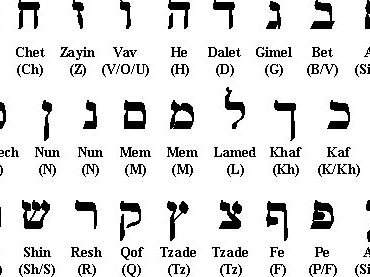
The Hebrew alphabet consists of 22 consonants and includes no vowels. Even modern Hebrew is printed with no vowels in most cases. When vowels are printed in books with the words it is to show how the consonants are to be read. When the Torah reader chants the text by reading directly from the Torah scroll on Shabbos, for instance, it is of the utmost importance that he reads the text exactly as it has been handed down by the Masoretes. The minyan checks the reader’s rendering of the Torah script by following in a Chumash or a book of the Torah that is printed with vowels.
” In the 9th and 10th centuries A.D. the Masoretes in Tiberias, Israel, perfected a system of vowel notation and added it to the received consonantal text…It is simply the best preserved and has received, by universal adoption, the stamp of authority…The standard Masoretic text is also known as the Ben Asher text, after the family name of the Tiberian scholars identified with the final editing. The Biblia Hebraica (3rd edition, Stuttgart, 1937) used by most modern students and scholars is based on the copy of a Ben Asher manuscript now in Leningrad and dating from 1008/9 A.D.” (Thomas O. Lambdin, Introduction to Biblical Hebrew). The Torah was given to Moses in approximately 1500 B.C. Twenty-five hundred years later the vowel placement for the Torah was standardized, even though there may have been alternate vowel placements and alternate understandings of certain passages that this standardization erased. It is the task of the person who seeks to pry open the text of the creation story to go back to the time when these alternate understandings were open and available by means of the changeable vowel structure.
A name, in particular, is arbitrary in its spelling and vowel structure. It is a special class of nouns. As the Torah scroll is written without vowels, and the vowels one can see in printed versions are an overlay, then one is justified in changing the selection of vowels for a name. If ‘Tehom’ is a name, then one can change the vowels. So, ‘Tehom’ תְה֑וֹם can become ‘Tohum’. In this case, the T*h*m remain, and the vowels, denoted by the * are open to variation. The word ‘Tohu’ תֹ֙הוּ֙ can also be changed by simply adding an ‘m’ to it, so it becomes ‘Tohum’. With this, the two words that are very similar as they are preserved in the Torah, can with simple vowel changes and the addition of the ‘m’ that partially denotes the plural in Hebrew, can be rendered in identical spellings.
‘The definite article in Hebrew corresponds closely to the definite article of English in usage and meaning. The basic form of the article is ha- plus ‘הַ’ the doubling of the following consonant. It is prefixed directly to the noun it determines:
שָּׁמַ֖יִם a sky
הַשָּׁמַ֖יִם the sky
There is no indefinite article in Hebrew, corresponding to the English ‘a’. שָּׁמַ֖יִם may be translated as “sky” or “a sky.” Patai and Graves explain that in Biblical Hebrew as in English, a proper name does not have a definite article in front of it. One does not write, the Marc. One writes, Marc. ‘That Tehom never takes a definite article in Hebrew proves it to have once been a proper name, like Tiamat. Tehomot , then, is the Hebrew equivalent of Mother Tiamat, beloved by the God Apsu, whose name developed from the older Sumerian Abzu; and Abzu was the imaginary sweet-water abyss from which Enki, God of Wisdom, emerged’.
In Hebrew the feminine plural is denoted by adding an ‘ot’ as a suffix, so ‘Tehom’ becomes ‘Tehomot’. Similarly, ‘Bohu’ becomes first ‘Behom’ and then in the plural, ‘Behomot’ or in English, Behemoth, a dry-land counterpart of the sea-monster Tehom. In the dictionary, ‘Tehom’ is ‘Ocean; abyss, chasm.’
‘Were it not for the Tehom-Tiamat parallel, we should never guess that Tehom represents the formidable Babylonian Mother-goddess who bore the gods, was rebelled against them, and finally surrendered her own body to serve as the building block for the Universe.’
We can see that Tehomot and Tiamat are very similar. ‘Tiamat’ lacks an ‘h’ sound. The ‘h’ sound can be easily gained or lost by the rules of sound changes from one language to another. ‘The ‘h’ is a voiced consonant, and over time some voiced consonants became voiceless, and vice versa, and consonants were occasionally lost.’ Furthermore, the dictionary meaning for ‘Tehom’ is suggestive in that it is the deepest part of the ocean wherein live monstrous sea dwelling fish. The nearness of the sound of the Tehomot-Tiamat nexus and the similarity of meaning between the two, the first being the place where sea-monsters dwell, and the second being the Mother-goddess (of Water) described above. In this sense, therefore, we can see the parallel between Tehom and Tiamat.
The Babylonian sea-monster corresponding with the Hebrew Tehomot appears as Tiamat, Tamtu, Tamdu, and Taawatu.’ They further point out that if one considers the various spellings of Tiamat, by philological rules, one can derive taw as the root of Tiamat. And, as taw is to Tiamat, so is Tohu to Tehom and Tehomot. That is, one uses the same rules that one can add a ‘m’ to Tohu so that it becomes Tehom(Tehomot being its plural form).
Patai and Graves weave together a third account of creation using various Biblical sources: Psalms, Isaiah Kings, Nahum, Proverbs, Jeremiah, Job, and Habakkuk. They call it the ‘third creation story.’ It expands the brief reference to ‘Tohu and Bohu and the Deep’. The Creator must struggle against water, personified by the Prophets as Leviathan, Rahab or the Great Dragon, not only because the Creatirix, whom he displaces, is a goddess of Fertility, and therefore of water.’ (Hebrew Myths, p 30). Recall that Marduk splits Tiamat into halves, using one half to impede the upper waters from flooding the earth, and the other half to provide a rocky foundation for earth and sea.
In the Midrash Konen, a cosmogonical and cosmological midrash, containing four parts written by four different authors, the contents of which closely parallel such apocryphal books as Enoch, 4 Esdras, etc., it is written: God found the male Upper Waters and the female Lower Waters locked in a passionate embrace. “Let one of you rise,” He ordered, “and the other fall!” But they rose up together, whereupon God asked: “Why did you both rise?” “We are inseparable,” they answered in one voice. “Leave us to our love!” God now stretched out His little finger and tore them apart; the Upper He lifted high, the Lower He cast down. To punish their defiance, God would have singed them with fire, had they not sued for mercy. He pardoned them on two conditions: that, at Exodus, they would allow the Children of Israel to pass through dry-shod; and that they would prevent Jonah from fleeing by ship to Tarshish.`
In this midrash shown above, the Upper and Lower Waters are locked in a passionate embrace and God tears them apart. This is very similar to the story about Marduk splitting Tiamat in two halves. One could protest that this is just a silly tale to explain how the Jews could walk dry across the water when the Pharaoh is in full pursuit, and thus has no relationship to any philological treatment. However, a midrash is a serious part of the Biblical canon. In the view of Patai and Graves, it can include traditions or information from earlier periods that perhaps overlapped with the editing of the Torah’ creation story.
Midrash was initially a philological method of interpreting the literal meaning of biblical texts. In time it developed into a sophisticated interpretive system that reconciled apparent biblical contradictions, established the scriptural basis of new laws, and enriched biblical content with new meaning. Midrashic creativity reached its peak in the schools of Rabbi Ishmael and Akiba, where two different hermeneutic methods were applied. The first was primarily logically oriented, making inferences based upon similarity of content and analogy. The second rested largely upon textual scrutiny, assuming that words and letters that seem superfluous teach something not openly stated in the text.
Biblical canon alludes to Leviathan as a many-headed sea-monster רָאשֵׁ֣י לִוְיָתָ֑ן , or as a fleeing serpent לִוְיָתָן֙ נָחָ֣שׁ בָּרִ֔חַ . or a crooked serpent נָחָ֖שׁ עֲקַלָּת֑וֹן
In the Ugaritic texts it says: If you smite Lotan…the crooked serpent, the mighty one with the seven heads. The language is the same in Hebrew. In particular, the word for Leviathan לִוְיָתָן֙. In Hebrew it is read with the vowels, and it reads as ‘Levyatan’. In English it is spelled Leviathan. If one removes the vowels from the Hebrew word, לִוְיָתָן֙, one can read only the consonants, and it reads as Loytan. Loytan and Lotan are practically the same. One is the Hebrew without the vocalization, or the vowels as given in the Masoretic text. In the texts from Psalm 74:14 and Isaiah 27:1 shown below, it says the God will crush and punish the Leviathan, There are three types of Leviathan; the many headed Leviathan רָאשֵׁ֣י לִוְיָתָ֑ן, the fleeing snake Leviathan לִוְיָתָן֙ נָחָ֣שׁ בָּרִ֔חַ, and the crooked snake Leviathan לִוְיָתָ֔ן נָחָ֖שׁ עֲקַלָּת֑וֹן. The Ugaritic text shown above has the exact same description for the ‘crooked serpent Lotan.’ Accordingly, one can say that Leviathan is a serpent of the water, and is even called a dragon or sea-monster תַּנִּ֖ין אֲשֶׁ֥ר בַּיָּֽם׃.
Just below is the line from Psalms that agrees with the description of the mighty one with seven heads.
אַתָּ֣ה רִ֭צַּצְתָּ רָאשֵׁ֣י לִוְיָתָ֑ן תִּתְּנֶ֥נּוּ מַ֝אֲכָ֗ל לְעָ֣ם לְצִיִּֽים׃ it was You who crushed the heads of Leviathan.
who left him as food for cOr “seafaring men”; meaning of Heb. uncertain.the denizens of the desert;
This line reveals the ‘many headed Leviathan’ in Psalm 74:14. This is like the seven headed monster on Hittite cylinder seals, and mentioned in Ugaritic mythology.
Isaiah 27:1
Tanach with Ta’amei Hamikra
בַּיּ֣וֹם הַה֡וּא יִפְקֹ֣ד יְהוָה֩ בְּחַרְב֨וֹ הַקָּשָׁ֜ה וְהַגְּדוֹלָ֣ה וְהַֽחֲזָקָ֗ה עַ֤ל לִוְיָתָן֙ נָחָ֣שׁ בָּרִ֔חַ וְעַל֙ לִוְיָתָ֔ן נָחָ֖שׁ עֲקַלָּת֑וֹן וְהָרַ֥ג אֶת־הַתַּנִּ֖ין אֲשֶׁ֥ר בַּיָּֽם׃ (ס)
In that day the LORD will punish,
With His great, cruel, mighty sword
Leviathan the ElusiveaMeaning of Heb. uncertain. Serpent—
Leviathan the TwistingaMeaning of Heb. uncertain. Serpent;
He will slay the Dragon of the sea.b
The line above has the other two designations of the Leviathan: the crooked one and the fleeing one. It also at the end of the line calls the Leviathan a ‘dragon of the sea.’
As quoted above in the Enuma Elish, the Babylonian Creation story, Marduk splits Tiamat in half:
After a terrible battle, Marduk overcame Tiamat. He split Her into halves like a shell-fish. Marduk used one of these as a firmament, to impede the upper waters from flooding the earth; and the other as a rocky foundation for earth and sea.
Tiamat is a water-monster, and also Tiamat and the Leviathan are the same. In the Torah God splits the waters into two:
וַיֹּ֣אמֶר אֱלֹהִ֔ים יְהִ֥י רָקִ֖יעַ בְּת֣וֹךְ הַמָּ֑יִם וִיהִ֣י מַבְדִּ֔יל בֵּ֥ין מַ֖יִם לָמָֽיִם׃ God said, “Let there be an expanse in the midst of the water, that it may separate water from water.”
וַיַּ֣עַשׂ אֱלֹהִים֮ אֶת־הָרָקִ֒יעַ֒ וַיַּבְדֵּ֗ל בֵּ֤ין הַמַּ֙יִם֙ אֲשֶׁר֙ מִתַּ֣חַת לָרָקִ֔יעַ וּבֵ֣ין הַמַּ֔יִם אֲשֶׁ֖ר מֵעַ֣ל לָרָקִ֑יעַ וַֽיְהִי־כֵֽן׃ God made the expanse, and it separated the water which was below the expanse from the water which was above the expanse. And it was so.
וַיֹּ֣אמֶר אֱלֹהִ֗ים יִקָּו֨וּ הַמַּ֜יִם מִתַּ֤חַת הַשָּׁמַ֙יִם֙ אֶל־מָק֣וֹם אֶחָ֔ד וְתֵרָאֶ֖ה הַיַּבָּשָׁ֑ה וַֽיְהִי־כֵֽן׃ God said, “Let the water below the sky be gathered into one area, that the dry land may appear.” And it was so.
וַיִּקְרָ֨א אֱלֹהִ֤ים ׀ לַיַּבָּשָׁה֙ אֶ֔רֶץ וּלְמִקְוֵ֥ה הַמַּ֖יִם קָרָ֣א יַמִּ֑ים וַיַּ֥רְא אֱלֹהִ֖ים כִּי־טֽוֹב׃ God called the dry land Earth, and the gathering of waters He called Seas. And God saw that this was good.
Splitting the waters into one that is above and the other that is below is the second day of Creation. The account of this splitting the waters is confusing and difficult to understand precisely. What is the ‘expanse’ or רָקִ֖יעַ? It is written in this manner to obfuscate what is actually happening. On the first day, there is Tohu and Bohu. God splits them apart on the second day. They are the Leviathan and the Behemoth, respectively. If one keeps this in mind, the account of the second day becomes more comprehensible. The Leviathan, a water-monster, is Tiamat or Tehom. The Torah Editor has submerged these details in order to keep intact the assertion that God alone created everything and He did this from Nothing.
Job 26:13
בְּ֭רוּחוֹ שָׁמַ֣יִם שִׁפְרָ֑ה חֹלְלָ֥ה יָ֝ד֗וֹ נָחָ֥שׁ בָּרִֽחַ׃ By His wind the heavens were calmed;
His hand pierced the cCf. Isa. 27.1.Elusive Serpent.-c
In this line from Job 26:13 in the second clause, ‘His hand pierced the Elusive Serpent’, the adjective נָחָ֥שׁ בָּרִֽחַ describing the serpent has two meanings. The first meaning is the one provided ‘elusive’ in the standard translation shown above. The other meaning is ‘bolted’. Properly, this is a passive participle of the verb to ‘flee’ or to ‘fasten with a bolt’. A passive participle can modify a noun, and therefore act like an adjective.
The significance of these last two quotes, from Isaiah 27:1 and Job 26:13 is that they connect the Leviathan and the Serpent. It is meaningful that both lines have the phrase נָחָ֥שׁ בָּרִֽחַ (fleeing serpent), and it also connects the word, Leviathan לִוְיָתָן֙ with this phrase. It also sets up an identity between this Serpent and the Dragon of the sea, הַתַּנִּ֖ין אֲשֶׁ֥ר בַּיָּֽם׃. Therefore, the Serpent is the Leviathan which is the Dragon. Furthermore, the dual meaning of the word בָּרִֽחַ is either ‘elusive’ or ‘bolted’ is also significant. If we use the second meaning, ‘bolted’, then the Serpent is bolted. In the third account of creation compiled by Patai and Graves, it says: ‘He confined Tehom with a bolt and two doors.’ This refers to a double door with a bolt shot across it to prevent Tehom from escaping. The same image occurs in the Enuma Elish, the Akkadian Creation Epic: after Marduk had killed Tiamat and formed the Heavens from one half of her body, he ‘shot a bolt across, and placed watchers over it to prevent Tiamat from letting out her waters.’ So there is an equivalence between God and Marduk, who both fought Tehom or Tiamat, and enclosed them in a prison with doors bolted.
Creation can be understood as a procreation, and for that a matriarch is necessary for the birth of the universe. Okeanos and Tethys are spoken of in a famous passage in the Iliad 14:201 as the progenitors of the gods. Hesiod names Okeanos the eldest of the Titans and father of 3000 rivers, and Homer calls him a god only inferior to Zeus. He was supposed to girdle the earth like a serpent, and was identified with Leviathan, the Great Dragon and Rahab. Eurynome is the daughter of Okeanos and Tethys, as told by Hesiod. ‘And he sang how first of all Ophion and Eurynome, daughter of Oceanus, held the sway of snowy Olympus,’ Apollonius of Rhodes in his Argonautica summarizes the Song of Orpheus. Ophion is the Serpent.
Robert Graves reconstructed the Orphic Creation story as: Eurynome, Goddess of All Things, rose naked from Chaos, divided sea from sky, danced upon the waves, stirred up the wind, was impregnated by it in the shape of a great serpent named Ophion or Ophioneus, and laid the World Egg.
There was an ancient belief that mares could be impregnated by the wind. (Iliad 16:149 etc..) (Handbook of Greek Mythology p29) Who knew? Eurynome was impregnated by the wind/serpent. In the second line of the Torah when God is hovering over the Waters, is a retelling of Eurynome being impregnated by the Serpent. וְר֣וּחַ אֱלֹהִ֔ים מְרַחֶ֖פֶת עַל־פְּנֵ֥י הַמָּֽיִם׃ In this phrase God has the epithet, ר֣וּחַ, which has two meanings, wind or spirit. If one chooses, ‘wind’, then the ‘wind’ is hovering over Tiamat, in other words, impregnating her. In this case, God is equivalent to the Serpent or even Apsu the Begetter who is the mate to Tiamat. The Torah Editor so tightly suppressed the story containing the matriarch, that He takes on different roles depending where He is placed in the enactment of the Creation.
There are two confusing words in English, Orphism and Ophite. An Ophite is not a follower of Orphism.
Orphism: The of mystic philosophy embodied in Orphic poems, and taught to the initiated in the Orphic Mysteries.
Ophite: A member of a 2nd century sect, who worshipped the serpent as an embodiment of divine wisdom. Comes from the Greek word for serpent.
In the Orphic Fragments 60, 61 70 and 89: Night, the Creatrix, lays a silver egg from which Love is hatched to set the Universe in motion. Night lives in a cave displaying herself in triad as Night, Order, Justice.
In the Near East the creation myths, part of the divine matriarch’s role had been given to a male-warrior escort. In the Enuma Elish the universe is created by the union between Apsu the Begetter and Mother Tiamat.
Alexander Polyhistor summarized Berossus’ account of creation as: where after El’s victory over Tiamat, the Goddess Aruru formed man from El’s own blood kneaded with clay.
‘Elohim’ usually translated as ‘God’ as is found in Genesis 1, is a Hebrew variant of an ancient
Semitic name for ‘the one god of many’. Among the Assyrians and Bablylonians it was ‘Ilu’. It was ‘El’ for the Hittites and in the Ugaritic texts. It was ‘Il’ or ‘Illum’ for the South Arabians. It was ‘El’ who headed the Phoenician pantheon. This is further proof that all that seems whole is not. Some strands of tradition or knowledge must have come along with the name ‘El’ in its various formulations.
The idea that God is a Serpent is found in the Ophitic tradition. The Ophites in the first century A.D. believed the world had been generated by a serpent. (Hebrew Myths p 32) As shown above, when God is hovering over the Waters, He is impregnating Tiamat. The serpent/snake appears many times in the Tanach, which includes all of the other Biblical writings. In addition to his role in Eden with Adam and Eve, he is involved with Moses:
In Numbers 21:8-9 shown below:
וַיֹּ֨אמֶר יְהֹוָ֜ה אֶל־מֹשֶׁ֗ה עֲשֵׂ֤ה לְךָ֙ שָׂרָ֔ף וְשִׂ֥ים אֹת֖וֹ עַל־נֵ֑ס וְהָיָה֙ כׇּל־הַנָּשׁ֔וּךְ וְרָאָ֥ה אֹת֖וֹ וָחָֽי׃ Then the LORD said to Moses, “Make a seraph figure and mount it on a standard. And if anyone who is bitten looks at it, he shall recover.”
וַיַּ֤עַשׂ מֹשֶׁה֙ נְחַ֣שׁ נְחֹ֔שֶׁת וַיְשִׂמֵ֖הוּ עַל־הַנֵּ֑ס וְהָיָ֗ה אִם־נָשַׁ֤ךְ הַנָּחָשׁ֙ אֶת־אִ֔ישׁ וְהִבִּ֛יט אֶל־נְחַ֥שׁ הַנְּחֹ֖שֶׁת וָחָֽי׃ Moses made a copper serpent and mounted it on a standard; and when anyone was bitten by a serpent, he would look at the copper serpent and recover.
The word שָׂרָ֔ף seraph means ‘poisonous fiery serpent‘. This serpent of bronze made by Moses at God’s command was kept and revered in the Temple sanctuary until King Hezekiah who according to 2 Kings 18:4 destroyed it in his reforming zeal.
ה֣וּא ׀ הֵסִ֣יר אֶת־הַבָּמ֗וֹת וְשִׁבַּר֙ אֶת־הַמַּצֵּבֹ֔ת וְכָרַ֖ת אֶת־הָֽאֲשֵׁרָ֑ה וְכִתַּת֩ נְחַ֨שׁ הַנְּחֹ֜שֶׁת אֲשֶׁר־עָשָׂ֣ה מֹשֶׁ֗ה כִּ֣י עַד־הַיָּמִ֤ים הָהֵ֙מָּה֙ הָי֤וּ בְנֵֽי־יִשְׂרָאֵל֙ מְקַטְּרִ֣ים ל֔וֹ וַיִּקְרָא־ל֖וֹ נְחֻשְׁתָּֽן׃ He abolished the shrines and smashed the pillars and cut down the sacred post. He also broke into pieces the bronze serpent that Moses had made, for until that time the Israelites had been offering sacrifices to it; it was called Nehushta
נְחַ֨שׁ הַנְּחֹ֜שֶׁת 21:9 This is the word that appears in Numbers
נְחֻשְׁתָּֽן .This is what the Jews called the Serpent of Bronze
This suggests that Yaweh had at one time been identified with the Serpent-god. The poisonous fiery serpent has the power to heal someone bitten by a snake. King Hezakiah smashed the pillars of Asherah, a Goddess that used to be on either side of the altar, and cut down the poisonous fiery serpent to which the Israelites had been making offerings, like to a god.
The idea of the serpent continues in a midrash recounting that Yahweh attacked Moses in the guise of a serpent in Exodus 4:24.
וַיְהִ֥י בַדֶּ֖רֶךְ בַּמָּל֑וֹן וַיִּפְגְּשֵׁ֣הוּ יְהֹוָ֔ה וַיְבַקֵּ֖שׁ הֲמִיתֽוֹ׃ At a night encampment on the way, the LORD encountered him and sought to kill him
The midrash reports that God attacked Moses in a desert lodging place in the dead of night. He assumed the shape of a huge serpent and swallowed Moses as far as his loins.
Why a serpent? Why to his loins? In Numbers as mentioned above, God orders Moses to make a brazen serpent. Serpents loom largely in the background to the Creation story. Moses’ penis is at his loins, and the serpent is an elongated penis. And the next line in Exodus tells how Zipporah, Moses’ wife, circumcised her son that night and wiped her son’s leg’s with the blood. Then she says and then repeats, ‘You’re a bridegroom of blood to me.’ Perhaps the mention of blood pertains to the blood of Abel. His blood initiated the Jewish people through the patriarchs, and Moses is the prime mover of the rest of Jewish history, its greatest prophet, the leader of the Jews out of Egypt to the Promised Land, Israel. His apotheosis is the true beginning of the Jews. He is the hero of the Torah. His story takes up the last four books of the Torah. In him is the creation. This is the start of his mission. He is at the beginning of the journey with his family to go back to Egypt. It is like the murder of Abel that initiated the history of the Jews in Genesis, and at the beginning of Exodus, the almost swallowing of Moses by the Serpent is another initiation. The circumcision is the sign of the Jews. It is bloody like a murder is bloody. It is the penis which is like a serpent. This episode with Moses and Zipporah is short, encompassing only three lines. Perhaps it was cut short by the Editor. The Serpent impregnates the Goddess in the original creation story. Does the circumcision somehow tame the serpent?
וַתִּקַּ֨ח צִפֹּרָ֜ה צֹ֗ר וַתִּכְרֹת֙ אֶת־עׇרְלַ֣ת בְּנָ֔הּ וַתַּגַּ֖ע לְרַגְלָ֑יו וַתֹּ֕אמֶר כִּ֧י חֲתַן־דָּמִ֛ים אַתָּ֖ה לִֽי׃ fMeaning of vv. 25–26 uncertain. So Zipporah took a flint and cut off her son’s foreskin, and touched his legs with it, saying, “You are truly a bridegroom of blood to me!”
וַיִּ֖רֶף מִמֶּ֑נּוּ אָ֚ז אָֽמְרָ֔ה חֲתַ֥ן דָּמִ֖ים לַמּוּלֹֽת׃ {פ}
And when He let him alone, she added, “A bridegroom of blood because of the circumcision.
The snake וְהַנָּחָשׁ֙ appears in Genesis in the first line of chapter 3. The last sentence of the previous chapter, chapter 2, is just above that line about the snake, in which Adam and Eve are naked עֲרוּמִּ֔ים. The very next line, the first line of chapter 3 introduces the snake and he is described as עָר֔וּם. This is the same word used just before to describe the nakedness of Adam and Eve. Yet, in this line about the snake he is ‘shrewd’. The standard translation of this word עָר֔וּם is ‘shrewd’, rather than ‘naked’. For the snake cannot be naked! It is immoral. The note beside the line says there is a play on the two words. Rashi says that the snake saw Adam and Eve having sex, and that he coveted her. He is ‘shrewd’ in that he encouraged her to eat from the forbidden tree. However, that is not the sense one gets when reading the same word to describe both. Rashi even says that the line that should have followed the description of Adam and Eve’s nakedness was that God provided clothing to cover it, as he does later. There is a lacuna here. Much is left out. That this line with the snake follows immediately after the line about Adam and Eve is doubly significant. It misplaces a line that should have been there, and it strongly suggests sexual intent.
וַיִּֽהְי֤וּ שְׁנֵיהֶם֙ עֲרוּמִּ֔ים הָֽאָדָ֖ם וְאִשְׁתּ֑וֹ וְלֹ֖א יִתְבֹּשָֽׁשׁוּ׃ The two of them were naked,gHeb. ‘arummim, play on ‘arum “shrewd” in 3.1. the man and his wife, yet they felt no shame.
וְהַנָּחָשׁ֙ הָיָ֣ה עָר֔וּם מִכֹּל֙ חַיַּ֣ת הַשָּׂדֶ֔ה אֲשֶׁ֥ר עָשָׂ֖ה יְהֹוָ֣ה אֱלֹהִ֑ים וַיֹּ֙אמֶר֙ אֶל־הָ֣אִשָּׁ֔ה אַ֚ף כִּֽי־אָמַ֣ר אֱלֹהִ֔ים לֹ֣א תֹֽאכְל֔וּ מִכֹּ֖ל עֵ֥ץ הַגָּֽן׃ Now the serpent was the shrewdest of all the wild beasts that the LORD God had made. He said to the woman, “Did God really say: You shall not eat of any tree of the garden?”
Like in the passages about Moses and Zipporah and the circumcision, these lines regarding Adam and Eve and the Snake, are about penises. The snake is a walking penis. Circumcision is about the penis. Oddly, circumcision removes the עׇרְלַ֣ת foreskin of the penis, which is like a garment. There should have been a line following in which God provides clothing for their nakedness.
Why is the snake even here? Perhaps he is the misplaced Serpent from the Creation. In the Akkadian Creation story, the Goddess who arises from Chaos is impregnated by the Serpent who comes into a being from the wind that is stirred up when the Goddess rises from the waters. As mentioned earlier, in the Iliad, it says that wind can impregnate a mare. The thought that there was this kind of sex was in the ancient world.
If tohu is Tiamat or Leviathan or a Serpent, and vohu is the Behemoth, then God breaks apart Tiamat and the Behemoth who were in sexual embrace, and the wind of God hovers over Tiamat and He impregnates Her. Darkness is on the face of Tiamat. The Darkness is the opposite of the Light that God creates on that first day, the very next line. This light is what is left after the Darkness has taken all. It is not a full light.
Patai and Graves report that mythical water monsters in relief decorate six small panels at the base of the Menorah candelabrum shown on Titus’ triumphal arch at Rome. In 70 A.D. the Romans destroyed the Temple of which only the Western Wall in Jerusalem still stands. Titus and Vespasian, then generals, were sent to Israel to end the war. They returned to Rome with treasures taken from the Temple, of which the Menorah was most significant.
Titus died in 81 A.D. and his younger brother, Domitian, succeeded him and erected the Arch of Titus in Titus’ honor. Inside the passageway of the Arch of Titus are two great relief panels. They represent the triumphal parade of Titus down the Sacred Way after his return from the conquest of Judea at the end of the Jewish wars in 70 A.D. One of the reliefs depicts Roman soldiers carrying the spoils, including the seven-branched candelabrum, the menorah from the Jewish Temple in Jerusalem.
On the lower left panel of the Menorah, a pair of dragons face each other in similar positions, though their wings and tails differ. These may be read as two Leviathans: the Fleeing Serpent and the Crooked Serpent. The symmetrical and identical fish-tailed creatures with somewhat feline heads shown in the top left and right panels are, perhaps, the ‘great dragons’ of Genesis 1:21. The dragon on the lower central panel, with its head twisted haughtily up and backward, suggests Rahab (‘haughtiness). An indistinct monster on the lower right may be Tehom or Ephes.
In the line below, Isaiah 40:17 the two terms, Tohu and Ephes, are synonyms. In the Hebrew line the two terms sit next to each other, even though there are two clauses that constitute the sentence. Ephes means nothing, and that is how it is translated in this selection from Isaiah. However, Tohu is not the abstraction of nothing as it is usually translated but Tehom, equivalent to Ephes, a water-monster or matriarch or patriarch other than God. Darkness is on the face of Tehom. Tohu and Bohu are in embrace, and as Darkness is described as being in embrace, more or less, of Tehom, then Darkness may be the Behemoth.
Isaiah 40:17 Though the Hebrew prophets disguised the names of Apsu, Tiamat, and Baou as empty abstractions, yet in this line from Isaiah, immediately follows a passage recalling God’s feats in the days of Creation. Here the two words are again, Tohu and Ephes, sitting again next to each other, and again synonyms. Tohu and Ephes, both oddly together. Isaiah either intended to hearken back to the second sentence of Genesis to treat the word Tohu as meaning emptiness, accepting the Editor’s choices, or he went back to that line, the first line of the Torah if the actual first line is actually its title, and used words that represented certain images that were real to his audience, the water monster Tohu-Tiamat and her consort, Behemoth.
כׇּל־הַגּוֹיִ֖ם כְּאַ֣יִן נֶגְדּ֑וֹ מֵאֶ֥פֶס וָתֹ֖הוּ נֶחְשְׁבוּ־לֽוֹ׃ All nations are as naught in His sight;
He accounts them as less than nothing
In another quote from Isaiah, 34:11-12, the two terms at the beginning of the second sentence of Genesis, those two things called Tohu and Vohu, emptiness and nothingness, and nothing are brought together, Tohu, Vohu and Ephes.
In Isaiah 34:11-12, Tohu, Bohu and Ephes are used with plain reference to their mythological meanings, when the prophet predicts Edom’s destruction. (Hebrew Myths p33).
וִֽירֵשׁ֙וּהָ֙ קָאַ֣ת וְקִפּ֔וֹד וְיַנְשׁ֥וֹף וְעֹרֵ֖ב יִשְׁכְּנוּ־בָ֑הּ וְנָטָ֥ה עָלֶ֛יהָ קַֽו־תֹ֖הוּ וְאַבְנֵי־בֹֽהוּ׃ eMeaning of Heb. uncertain.Jackdaws and owls-e shall possess it;
Great owls and ravens shall dwell there.
He shall measure it with a line of chaos
And with weights of emptiness.fI.e., He shall plan chaos and emptiness for it; cf. 28.17; Lam. 2.8.
חֹרֶ֥יהָ וְאֵֽין־שָׁ֖ם מְלוּכָ֣ה יִקְרָ֑אוּ וְכׇל־שָׂרֶ֖יהָ יִ֥הְיוּ אָֽפֶס׃ eMeaning of Heb. uncertain.It shall be called, “No kingdom is there,”-e
Its nobles and all its lords shall be nothing.
There was an ancient belief that mares could be impregnated by the wind. (Iliad 16:149 etc..) Like the wind being stirred up when the goddess rises out of the chaos and then becoming a serpent impregnates her. The image of the goddess being penetrated by the serpent, or the wind, is preserved in the Torah account of creation, of course, suppressed. Like things pushed down, no matter how hard and no matter with how much determination, has a way of cropping back up. The Torah like all great literature reflects our consciousness. The middle path is almost impossible to tread without error. Some step, no matter if it is one hundred miles until one falls off even just a little, is enough leverage for what has been beaten down to rise up again, like John Barleycorn. The serpent/penis rises up in all its glory, even in the story of Moses, the Torah’s greatest hero. The scene wherein he is attacked by God in the shape of a serpent, and the circumcision by son by his wife Zipporah is highly suggestive. The rod on which Moses put a serpent and which is then worshipped until much later King Hezekaiah destroyed it only adds to the mystery of the serpent in the Torah. The Torah Editor tried to erase the traces of the earlier creation accounts coming from Babylonia and elsewhere. He created out of the ruins of those stories, his own, that featured a most powerful God who created everything out of nothing.
This fascination with the penis has roots in India. There the lingam and yoni are worshipped in meditation. They represent the erect phallus and the vulva. Some proponents suggest that the religions that came out of the Fertile Crescent at the beginning of the second millennium B.C. had their foundation in India. To this day the most profound practices to gain union with the godhead or to convert the limited human personality into a divine personality are found in the meditational sadhana traditions of India. There are meditational practices in Judaism, for instance, but they are not the focus at any level of orthodoxy. One cannot find in the Torah the method to gain the level of any of the characters in the stories from Moses on downward. The Shemona Esrei prayer that Jews pray three times a day is a meditation, but there are no teachers to guide the practitioner. One can become a moral person through Musar, and a fine individual through Talmud study, but that does not hold a candle to one who has shed the personality.
The Aghori Vimalananda said: “I have never believed in religion. Religions are all limited because they concentrate only on one aspect of truth. That is why they are always fighting amongst one and another, because they think they are in sole possession of the truth. But I say there is no scripture or one holy book or one experience. This is why I say, when people ask what religion I follow, ‘I don’t believe in Sampradaya (sect), I believe in Sampradaha (incineration).’ Burn down everything which is getting in the way of your perception of the truth.”
In its essence, religion’s goal for the practitioner is to reveal his true face, that face unadorned by any vestige of personality whether virtue or neurosis. If so, what value of any rule or ritual or sacred belief? In India the investigation into the self didn’t require the elaborations of a religion, although Hinduism and later Buddhism did develop. Religiosity is inevitable, however, given that man is a social animal. The stories that Jesus traveled to India during the unaccounted for years after his bar mitzvah reveal the emptiness of Judaism for one who wanted to delve headfirst into self-knowledge. The idea that there is something worth finding if one strips away the illusory reality that is all too real does not easily follow. It is counter-intuitive, and beyond a glimmer of understanding for anyone not introduced to it by a teacher or an advanced practitioner of meditation. The one place where such people assembled and strove to accomplish this was in India, and that source animated all other religions that flowed from it.
In conclusion, the snake in Genesis has elicited all sorts of treatments. That he is the devil is problematic. Even in Job he is only carrying out God’s directions when he brings suffering to Job. In the following passage he is the one who brings death to all living things.
The Zohar Chadash says that Samael or Satan saw God teaching Adam the Torah and the angels praising them. He then went down to earth as a snake and a shadow was upon him. He appeared as a woman so that he could seduce Eve the better. He seduced and deceived her until she would say a line starting with a mem. He took that letter and placed it on his left arm and he waited until she would utter other sentences that began with two other letters, vov and tov, that together with the mem spell the word ‘death’. That word has carried over into English as the chess term, check mate, ‘mate’ being the English pronunciation of ‘mavet’ or ‘mot’ in Hebrew מות. He induced her to utter the two other letters of the word ‘death’, the vov and tav. He tried to join the letter together but the mem flew up and down. Then he finally succeeded, the vov surrounded the mem on all four sides, and then the tav did also. The mem was in the middle. So was death established for all living things including man. This is otherwise said: death has risen up in our windows; this is Samael, for he is one of the windows of heaven. What man can live and not see death? Suddenly he overcame Eve and heaped filth upon her. Then God came down to see their appearance, but Adam and Eve hid. They didn’t want to hide their nakedness. Rather they were ashamed of the filth poured on them by Samael.
This is taken from the Zohar Chadash, which contains parts of the Zohar missing in manuscripts used by editors of the Mantua version. The material was chiefly collected by Abraham Halevi Berokhim from manuscripts found at Safed. Quoted by folio of the Warsaw (Levin-Epstein) undated edition.
Bibliography
1. Robert Graves and Raphael Patai, The Hebrew Myths: The Book of Genesis. New York: Greenwich House. 1968
2. H.J.Rose, A Handbook of Greek Mythology Including Its Extension To Rome. New York: Penguin Group. 1991
3. David Rosenberg, Abraham, The First Historical Biography: New York: Basic Books. 2006
4. Thomas O. Lambdin, Introduction To Biblical Hebrew. Norwich, England: Page Bros. 1976
5. Robert E. Svoboda, Aghora, At the Left Hand of God. New Delhi, India:Rupa Publications India Pvt. Ltd. 1986
6. Yoseph Milstein, Chok L’Yisrael, Deuteronomy 1. Hollandale, FL: Kadmon Genesis Publishing Corporation. 1996
7. Fred S. Kleiner, Gardner’s Art Through The Ages, Volume 1. Boston: Cengage Learning. 2016
 Warrior, Felt, Undertaker, and other stories