THE DEMISE OF SAVAS
Chapter 1 INCUBAI
September 4, 2015, The Boston Enquirer, by F. P. Weber.
A local stalwart, inebriated after a night carousing in Chinatown, and familiar to the neighbors in the northern section of Avon Hill, Cambridge, encountered near the break of day an unusually elongated man and his companions. The group entered a house not theirs. It was certainly odd, as it was dead quiet, as silent as a graveyard. Reports indicate that disquieting events unfolded. Based on scattered notes and memorabilia describing other accounts of unbid nocturnal visitors, the order of events can be stitched together with a level of certainty.
Incubai, noticed sporadically in Boston in the last few years, quit men of their souls. In this instance it is surmised that incubai gathered round the bed of the unfortunate as he lay in deep repose. They deftly uncovered him revealing his tumescence. The chief, taller and more slender than the others, stroked the erection’s soft underbelly. Another expertly caught the ejaculate in a cloth subtly woven of immaculate wool and folded it neatly into a large box similar to a coffin. This they hammered shut and wrapped in chains for the ectoplasm unhampered might float away. They banged it down the stairs scratching the woodwork and the banister on their exit. The victim lay fast asleep serenely unaware.
Chapter 2 THE NAZIS
Martin awoke with gusto inhaling the clear crystalline air deep into his lungs. It was a clarion day in the late autumn of 1942. The Nazi onslaught into the USSR overwhelmed any obstacle in its path. The Einsatzgruppen in the rear of the rapidly moving front scoured the earth for Jews. Martin had enthusiastically enlisted in its ranks. The upper echelon selectively recruited highly educated men, the more effectively to hammer in their justification for bestiality. “The Jews in their entirety must be killed to fulfill our dream of utopianism.” Biblical history reveals, if considered without prejudice, a truth buried by thousands of years of obfuscation: that the Jews worshipped blood sacrifice and celebrated it in the story of Abraham’s sacrifice of his son, Isaac, to usher in monotheism; that Jesus, another Jew, had willingly undergone crucifixion to cleanse with his blood the world of sin; and the third step of this holy trinity was the extermination of every Jew in an ultimate act of obedience to God that would force the Gotterdammerung.
Martin embraced his role with fervor, a passion fueled by a long-forgotten memory. In his youth his inquisitiveness led him to pore over this grandfather’s library of magic. The Nazi movement gushed like a spring broken from a rocky face into world consciousness. They meant to draw down by the use of the swastika an energy lurking behind the sun.
The Nazis worshipped death whether heroic or tragic. The sorrow of the Jews they knew would lift a platform of dread never before witnessed. Then the triumphant Germans would rule. As the ancients had slain their sacrifices on stone altars, so the Nazis remade the world into an altar on which the Jew’s sacrificial flesh would burn and smoke, its aroma pleasing to the glorious Aryan gods, the plumes rising high into the pure skies of the Fatherland in such awful quantity, would serve as an elixir of immortality, an ambrosia.
For Martin the morning dawned auspiciously. The Einsatzgruppen corralled the Jews. They shattered doors and unearthed hiding places in basements. They forced the Jews to goose step down familiar paths to ravines or forest clearings. The locals either pointed out the Jews or watched apprehensively as their neighbors crept to their deaths. The Nazis beat them with whips, stripped the men to their underwear and the women completely naked. Then they shot them at pits’ edges and artfully arranged the bodies in rows face down to eat the dirt, then two others in opposite direction, like sardines in a metal container.
“Martin,” one of his fellow officers barked, “This one’s a doll!”
A woman in her first flush of beauty, virginal, engorged their lust.
Martin pinched her hind flesh as a farmer would a mare. She stumbled. The Jew next to her, a man, grabbed her. Martin pulled her away and pushed her against an oak tree.
He shot full in the face the Jew who had instinctively tried to block him. He mistakenly locked eyes with him and saw for an instant an infinite chasm of hate, longing and violence. Long had he harbored the fear, so he always averted his gaze. Her squirming magnified his pleasure to ecstatic heights. She forever appeared at the edges of his consciousness like a succubus when he slept dutifully with his wife. He welcomed the Jewess’ presence, though he apprehended nothing else about her.
The Nazis methodically recorded every lurid detail. They photographed the dead, the orgies, the locations of the mass burials, and the participants. It didn’t matter that the Jews had lived in Europe since Roman order had been overthrown. For history to progress the Jew must suffer annihilation. Murder is a more intensified form of death. Mass murder, especially when murdering tens of thousands at a throw, is to erect a mammoth pyre the gods must grace. The acts of humanity normally molder like spent embers of miniscule fires of which to bother the gods do not deign. Martin, only a drop in an oceanic sewer of murder, mustered what he could to hasten the magic.
Post war Martin settled into a stolid modern European lifestyle. Eventually the chaotic aftermath of the war dissipated, and prosperity returned. He married, had daughters, and lived to see his grandchildren as toddlers. Practitioners of the occult drain their bodies of vital fluids. The strain is immense. Martin was no exception. He suffered a premature death, for his grandfathers had lived to almost a century. For his crimes, he ought to have been denied his soul, as did many of comrades in arms withered to nothingness. They vanished from the list of names and would never know life in any fashion again. Martin escaped that fate for his connection to that Jewess spared him.
Chapter 3 THAT MORNING
Philip lingered a-bed that morning in late autumn. The tinctures and half heard chimes pricked his skin more acutely than others. He imagined himself superior for many reasons, one of them being his exquisite sensitivity to his surroundings. Shapes, lights, shadows, outlines, patterns or an abstract thought might easily force him to change to the other side of the street as he walked to the consternation of those accompanying him. He offered no reasonable explanation for his abrupt behavior. In bed he felt safe. The warmth of the covers enveloped him cocoon-like. He permitted himself one weakness, to dream in a semi-wakeful state. He controlled the images as they fled who knows where, but not completely. In his secret meditation he found himself in the gardens of a small palace in Paris on an elegant boulevard where he had grown up and matured. A man in shadow emerged from behind a hedge. They wrestled, as did Jacob and the angel, nearly to the point of death, and then lay down, side by side. Their erections pulsed in the sun. Every so often he allowed himself this indulgence. The men altered in appearance according to his latest infatuation. He stripped off the sheets and stood erect. He roundly cursed his last relationship from over a decade in the past with a woman and for everything that harrowed him since their bitter parting. He couldn’t let her go.
As he was dressing, he felt something, where normally there was nothing. He looked in the mirror. Nothing amiss. However, his scarf was awry. He refolded it, making sure it was square, and then just as carefully replaced it around his neck. A wave of panic momentarily engulfed him. A visit with the doctor was in order, he thought.
First the accustomed stop at the café where he broke his fast. A day-old croissant washed down with lukewarm coffee. His finely wrought countenance of dark European sophistication lent him the aura of high intelligence. From those lofty heights anchored by no ledge nor precipice, he surveyed the others. He nodded sagely to the few people he knew by appearance only. Then he buried himself in his laptop. He found a listing for an internist at Mass General Hospital. Nothing less than a Harvard institution would suffice. After a quick call he had an appointment for later that morning.
Chapter 4 DR. MARGOLIS
The nurse put her tools back into their places. She noted his contemptuous glare but ignored it. Moments later, the door opened again.
“I am Dr. Margolis. What brings you here today?”
Phillip grunted.
Puzzlement crossed the doctor’s face. Such a grimace! “No matter. I will look at the chart.”
The nurse handed him the manila folder with her notes and left the room.
“It says you have come here due to an unknown ailment?”
“True. I can’t put a name to it or even where my concerns lie.”
“Your indicators reveal no areas of concern. For a man of your age, you seem normal and robust.”
“It’s not normal, that I can tell you. I woke up this morning and felt different.”
“How are you different?”
“Perhaps because I am not a native speaker, the words escape me.”
“Is that a French accent I detect?”
“Yes. I have lived in the states for many years.”
“Then you must have acquired a mastery of English. You speak like a highly educated man.”
A glint of pride appeared in Phillip’s eye. “I am an alumnus of MIT. Where did you go to school?”
“Let’s go back to your reason for coming here. I believe you are sufficiently relaxed. Can you describe it now?”
“It is vaporish. Like a fog over the shore, one cannot see where the land ends and the sky begins.”
“Are you able to pinpoint the locus of this change?”
“From somewhere above my navel.”
“Are you in any pain? For instance, when you stand up or sit down?”
“No. It is not a physical pain that drew me here.”
“Then perhaps you need to consult a different specialty.”
“I don’t think that is necessary. Let me be more specific.”
“By all means, Mr. Savas.”
“There is in me an emptiness I did not detect before, and though not quite an ache, I expect that one will arise in due time.”
“That is interesting. When did you first notice this emptiness? The idea of nothing?”
“Just this morning. It is as if there is no echo at all.”
“Mr. Savas, after listening to you, I don’t know of any way under the sun to help you.”
“Do you have any advice?”
“I advise you look for ways to fill yourself up.”
Phillip laughed curtly. “You call this a diagnosis?”
“It is a consultation.”
“I would like a consultation with another doctor or even a set of doctors. I am certain that someone did this to me and not by normal means.”
“Did what to you? Are you suffering from paranoia?
“I already told you. In France every graduate of medical school is not of second class intelligence.”
Dr. Margolis closed his folder. “Please go to the payment desk. I will leave the paperwork there.”
“Do you have some paper that proves this is a consultation?”
“A paper?”
“Yes. Something in writing on an official letterhead that proves this is a consultation.”
“When you booked the appointment, you made it clear what you wanted.”
“No. I never agreed to a consultation. I made an appointment.”
“When making the appointment, the receptionist asked you what you wanted.”
“Can you prove that? No receptionist asked me a question with that kind of precision.”
“This line of argument is self-defeating. Were you in the debate club at college?”
“Why? If I have thought of it, others have thought of it also.”
Dr. Margolis saw the conversation would not arrive at a logical conclusion. “I am leaving, Mr. Savas. Do what you will.”
“This wasn’t even a consultation. Why should I pay?”
Dr. Margolis shuddered. He closed the door behind him.
Phillip collected his satchel, rearranged his scarf and left the waiting room. He stalked out of the offices without looking back.
“This is a medical matter. I want to know what happened to me. I feel it.” He unlocked his bike from the stall. He bicycled everywhere. He had not long ago cracked his clavicle by slamming into an opening car door. An upper body weakness persisted, but this was unconnected as far as he was concerned with what bothered him. The doctor had refused to answer anything useful. He wondered what he should do next. The Charles River below the Longfellow Bridge flowed sluggishly into the Atlantic. He had recently awoken to the fact that he hadn’t attained his life’s dream, and he was already well past 50. He dreamt he could have discovered a way to organize the billion bits of data created by computers and made millions of dollars. “That Moldovan bitch, Mara Elena, betrayed me.” He blamed her for his poverty.
He biked over to his favorite café, Darwin’s, on Mt. Auburn St. where it had stood for decades. It appealed to his sense of vanity to be seated under that roof. At times he dreamt of the important research that had been transacted there, and by being a regular, he considered himself a participant in a Socratic amphitheater. As he restricted his diet for reasons related to lengthening his life span by a decreased intake of calories over the long term, he rarely ate fresh pastry or even a sandwich. Unless, of course, he could take from another’s dish. He knew when the café discarded its day old pastries and loaded up on the free bags of them. With a coffee he bought, he carefully doled out one or two cakes for a meal.
In mid chewing, he remembered his quandary. Somewhere on the edge of his brain or was it his heart, it was difficult to distinguish, he could sense a change. Its nature confused him. He conceived of the body as a machine encoded by highly complex software. He wanted to find a doctor who shared that perspective and who could pinpoint the discrepancy in code. Perhaps, he reasoned, a glitch had occurred.
Chapter 5 DR. KANOFF
He flipped open his laptop. He found a Dr. Kanoff, an internist with both a medical and doctoral degree. That sounded promising. He contacted the office. Fortunately, someone had cancelled. He took the appointment. He scoffed at religion, an opiate for the masses. He frowned on what common people believed. Omens, long held in contempt, deserved deeper consideration. The ancient Greeks practiced augury. Omens pointed to the truth peeking through illusion. Picking up a broken appointment for him was more than the offering of brute chance.
Dr. Kanoff’s office sat on the other side of the hospital campus, near where Scollay Square had once flourished. When it was demolished in the 50’s in the name of urban renewal austere buildings had sprouted like monstrous growths. An elevator whooshed him to the sixteenth floor. He stepped out from the cabin to find himself in a wide carpeted hallway. High doors limned the walls with a regal majesty. Philip caught his breath. He liked the number sixteen. It had positive aspects. He walked down the carpet to the end of the hall. “Where?” Next to the men’s room, he saw the room number to the doctor’s office. He winced. That was a bad sign. Nevertheless, he smothered his distaste and entered.
“Mr. Savas?” a reed-like emaciated man asked in high thin falsetto.
“Am I in the right office?”
“That depends on whether you are here at all.”
Philip narrowed his eyes. “Are you doubting that I am here?”
“Tell me, Mr. Savas, do you prefer the prefix Mr. or Dr.?’
“I prefer Mr. Why do you ask?”
“I like to sign my name as Dr. Dr. Kanoff.”
Philip recognized at once to what Kanoff was referring. “I am a doctor of mathematics and in political theory, though I prefer not to flaunt titles.”
“I have adopted the practice of writing it as Dr. squared. What do you think of that?”
Philip took pause. “I think it excessive.”
“Do you really, Mr. Savas? I think it too doctorish.”
“Doctorish? I’ve never heard the word.”
Kanoff sat in the chair behind his desk, an enormous mahogany piece. He motioned for Philip to sit in the chair opposite him.
He was beginning to feel smallish. A vein on his forehead began to pulse.
“Are you employed?” his voice sailing off into higher registers.
“I have my own company.”
“Oh, and is it called, may I ask, Panta Rei?”
“Yes. I am a consultant.”
“And what does ‘Panta Rei’ mean?”
“All things.”
“In what language?” Kanoff asked, licking lips in anticipation.
Philip wondered what he was doing with his tongue. “Greek, I think.”
“What inspired you to give your company a Greek name? The vases depicting men licking one another’s phallus?”
Philip was shaken by the reference to homosexuality. He thought it gross and unflattering. “My god!’
“I think you are a habitual liar, Mr. Savas.”
“You lie!” He felt his anger growing.
“Your income is a hole, it’s a joke. It’s laughable and practically nonexistent.”
“I’ve got enough! That ex of mine! She ruined my chances!”
“By ‘ex’ do you mean double x? A helix perhaps!”
“I’ve been preoccupied with her ever since I last saw her.”
“Oh,” Kanoff nodded his head, “She’s your bête-noir?”
“She persecutes me. I am constantly defending myself from her attacks.”
Kannoff laughed hysterically. “Aren’t you the litigious one?” His glasses reflected the overhead lights right into Philip’s face.
Philip felt the interrogation had lasted long enough. He stood up, and shouted, “Are you some kind of imp?”
Kanoff poured him a glass of water from the pitcher on his desk and offered it to him. “Does this make you feel better? Do you thirst?”
Philip took the proffered glass and threw it onto the floor, shattering it in all directions. “You are a fraud!”
Kanoff remained aloof. “I gave you a diagnosis when you first came in. Everything else is a gloss.”
Philip sat back down to reflect. He prided himself on his powers of discernment, yet he couldn’t recall hearing any diagnosis. “You did?”
“Though you are sitting in front of me, Mr. Savas, no one is there.”
He looked down at his feet. When he lifted his eyes, Kanoff was gone. “Where did he go?”
He heard a toilet flush. Disturbed at the thought, perhaps he was sitting naked on a toilet, and someone was watching, he shivered. To his astonishment, he was in a toilet stall. He gathered up his pants that were sitting at his ankles. He hurriedly hitched his trousers and buckled his belt and flew down the hall. “Maybe,” he asked, “Kanoff doesn’t really exist?”
Chapter 6 HER TITS
Shared custody of the children drove him mad. Every Saturday morning the children, Stella and Danny, attended a Russian math class in Brookline to buttress the miserable pace of the public-school monotony. He swore it was his weekend to take them to the class, but the children preferred to go with their mother. Maybe it was due to his constant scolding for not paying closer attention to math.
He ran down one street then another hunting for them. He spied them at last going up the steps to the courtyard to the apartment where the math class was held. He cornered them in the courtyard without any other place to hide. He bound breathlessly up the stairs. “You! You stole them from me!” He ran to his daughter, now 9, cowering from his glare. Danny, 5, slunk close to the ground. Philip’s anger flared to volcanic heights exploding. The children no longer loved him. This realization almost struck him down dead. It was all because of her. He ran at Mara Elena and slammed her against an iron railing. His hands crushed her breasts and tore her blouse.
“Who has harmed me?” Its nature remained inscrutable. That last meeting with Kanoff unnerved him. Any person, especially one of his acumen, might undergo hallucinatory stages in the steps prior to a major breakthrough. It was the cost of genius. He had read accounts: Swedenborg and his 40-50 cups of coffee a day, Newton with his delving into the occult. Other luminaries at the dawn of the scientific age drank from the same cup. They too suffered and persisted! He also would endure this crucifix.
Mara Elena had lied about everything. An older woman who had witnessed the altercation from her window from an upper apartment, called the police.
He despised touching her round and full bosoms, balloons of toxic goo. She stuck them in his nose on purpose. “The bitch!” He had a police record because of her duplicitous tits.
As he cycled back to Cambridge his mind returned to that infamous date when he lost his half-custody of the children to her. It was the final break between them. A betrayal he could never forgive.
That damned Cambridge Family Court and Judge McSweeney cost me everything. On June 18, 2013, he stood in court at a small wooden table before the judicial bench. He glowered at Mara Elena’s attorney. She had walked on purpose! too close to his desk with its manila folders he had arranged exactly. That witch. He came pro-se, that is, without an attorney. As far as he was concerned, they were as a profession perfectly useless. As a Phd. he could master any discipline better than its practitioners.
He brought suit against Mara Elena for shirking precise adherence to visitation scheduling and was astonished to find a countersuit for full custody. After 400 hundred appearances at the Family Court, including 5 full trials and countless contempts and court appearances, she had decided to go for a full cancellation of his share of the custody both legal and physical, and further, to end his visitation altogether and forever.
“The court will go into a short recess before we start with the Savas-Cantor trial,” announced Judge McSweeney. He looked at the looming tower of memorandum and claims of suit that was the case docket for them. No one could hope to explore its ever-expanding mounds of paper. The judge didn’t even make a pretense of reviewing its content before the trial date. There simply wasn’t time.
That drove Savas particularly mad. For him every paper, indeed, every jot, spittle and rhyme carried precious meaning.
Many cling with dear life to the belief that the holy ghost of individuality stamps every person at birth with a unique personality. In a courtroom the leaden atmosphere hangs heavily on the litigants. The extreme pressure breaks apart the fragile assemblage of that so-called uniqueness. The least prepossessing face is the one that is revealed, the one each one would rather keep private. If this is by design of the Creator, then it well serves the purposes of the court. With relative ease a judge may penetrate all the obfuscations the litigants pour forth with abandon to litter the floor and arrive at the truth of the matter.
He woke up from his re-reading of his own history and wondered how he had ridden for so many minutes without any outer consciousness in operation. He had gone as far as the outer precincts of Harvard Square.
Chapter 7 THE SWEDENBORGIAN CHURCH
The Swedenborgian Church in Harvard Square sleepily sits between The Busch-Reisinger Museum and the Harvard Art Museum. A mystical solace emanates from its stately architecture.
He climbed off his bicycle, worn and weather beaten. He had never ventured inside the church and didn’t know its denomination. It offered an oasis of solidity in this day of shifting realities. His belief in augury confirmed that. He walked up to the door and gently pulled half expecting it to be locked. It opened, and he walked inside darting his eyes left to right.
A simple cross hung above the nave. Though a Jew, the agony of Christ with his crown of thorns and his nailing to the crucifix transfixed him. He identified with the gentle son of the Lord finding salvation after the savagery inflicted. The weight of his own suffering on this earth had nearly crushed him, but he persevered. He considered his course of life a noble quest and often pictured an armored man on his horse sallying forth for the grail. He slipped into a dreamscape of that knight entering a dark forest with immensely tall trees. He stood there in the church perfectly unaware of his surroundings still stalking through the forest for a few moments and then awoke. He felt a presence to his left. Someone had been watching him. He grew alarmed.
Chapter 8 JANE
“Welcome.”
He shifted his crinkled brow into one of sublime sophistication.
A lady, but definitely beyond the bloom of youth, sat squarely in a chair behind an oaken table.
“And why are you here?” he asked.
Something about his look suggested fragility, may be a European flair. It only rendered him more alluring. Her half-developed third eye sensed a cloud of trouble harrowing him from behind.
“I am here by chance only. Sometimes I just meditate on Christ.”
“Meditation?”
“Divination.” She pulled out of her purse a pack of everyday playing cards.
He distrusted any mention of divination. Yet, the numerical nature of the playing cards with its royalty at the summit had long fascinated him. He put on the top shelf the kings and queens and jacks that only played this masquerade, but who really were the mathematical geniuses who had graced the world with their wisdom. With them he stood shoulder to shoulder.
“Would you like to see a divination performed?”
He sat in judgment of her. Her plain looks and even masculine features appealed to him. “What is your name?” He sat opposite her, the table between.
“Jane.”
“I’m Philip.”
“From the New Testament. Something reminded me of the Old Testament.”
“Is that why you sit in a church?”
“I have this girlish wish to meet someone who has the name of one of the patriarchs.”
“How can names have meaning?”
“There are old and new souls. If I had to guess, I’d say you are an old soul.”
“One of my names is Isaac. But I don’t think that a name chosen from a list or from a dead relative can carry any real meaning beyond that.”
“That’s wonderful! A patriarch. Are you aware of the sacrifice of Isaac?”
“Why does that even matter?”
“When Abraham nicked his son Isaac with the blade, part of his soul suffered grievous harm. Only with the Advent did he find redemption.”
Philip found not a strand of connection. He resumed his customary posture of superiority.
Jane felt a retraction, as if the wintry moon had been eclipsed by a cloud. She took another tack. “Would you like to proceed?”
Philip stood, and finding a pressure on his shoulders, sat back down. He looked behind. “It might be interesting.”
She smiled. She wanted to alert him to that umber mass that clung to the back of his head.
Chapter 9 THE READING: THE PAST
She began. She asked him to shuffle the cards. In high stakes poker the dealer is always suspect. Formally, he takes the position of questioner, as one who prays audience before an oracle, in this case, Jane. She removed two cards, the topmost and the most bottom, and named them according to tradition, the Surprise. She placed these special cards face down and to the side. So far so good. Then she dealt three sets of ten cards and named them: the Past, the Present, and the Future.
First came the Past, because we walk backwards through time, and it is good to see where we have been. She looked up at him and felt the force of his penetrating gaze. She stammered.
“The indications are that the early stages of your relationship with your wife,” she glanced upward and saw a tightening of his jaw, “started with promise, and then more swiftly than you wanted, trouble ensued with her most likely. She was unfaithful?”
Anger clouded his eyes.
Her heart leapt toward him with pity. She wanted to clasp him to her breast. “Shall we go on?”
Contempt contorted his face. He hadn’t intended to speak and couldn’t, given the twisting of his neck, yet he spoke, “Yes, if you would be so kind.”
She felt the contending of forces within him but imagined she could quell them and perhaps exorcise them. “Let us move on, then, to the Present.”
She dealt the Present. Can we plant a flag on the present moment like some explorers did long ago upon arriving to the shores of Massachusetts as a new frontier, the City on a Hill, as claimants for the throne of their majesty. As easy as the word ‘now’ is to say in any language, it really doesn’t exist. If we are moving backwards through time, then our path cannot hew a straight line toward it. And so, we trace a circle or rather a spiral of ever decreasing radius until the moment of death. That spiral and ‘now’ are synonymous and the only time that the three threads of existence, Clotho, Lachesis and Atropos, collapse one onto another.
Chapter 10 THE READING: THE PRESENT
She grimaced when she saw the lay of the cards. Pale ghosts of sorrow and disappointment hunched at the gate.
“What do you think about the idea of karma?”
His jaw sharpened to a point. The term nauseated him. Robbed of its context it sank into the cesspool of popular psychology.
His lower face reminded her of a scarecrow. She told him more disjointedness was approaching or had already occurred. His thoughts turned to those who had hurt him. His father, a stern authoritative man, towered Frankenstein-like over his boyhood. His ridicule haunted him still. His two-faced friends refused to placate his outstretched hand. His most harmful enemy was his ex-wife, who stole right out of his hands the fruits of his genius and of his loins. For that betrayal he would never forgive her.
“Your karma is catching up with you.”
She did not see the ghastly diorama of his past now in his purview.
Savas approached the bench. Judge McSweeney had already said, “The court will go into brief recess before we begin with the Savas-Cantor trial.”
Savas spoke, “I have something important to say.”
“The court will go into a brief recess.”
Savas spoke a little louder. “I have something important to say.”
The judge peered over the lip of the bench. “You what?”
“I have something important to say.”
The judge folded his face into one of unimpeachable patience. “I know you are acting without the aid of a lawyer. What do you want to say?”
Savas’ eyes shone. He pointed to the table where his ex-wife, Mara Elena and her lawyer sat. “They have breached legal decorum. The three-way meeting did not occur!”
“Okay, you are here now. Why is that any concern of the court?”
“We haven’t agreed to the exhibits. I felt unsafe going to their offices.”
The judge looked at Mara Elena’s lawyer, Nancy Baskin, a slight woman of middle age. “What did you say?”
“I felt unsafe, and we haven’t met to agree to the exhibits.”
“You haven’t agreed to the exhibits?”
Attorney Baskin spoke, “He suggested a hallway in MIT for the meeting. We refused.”
The judge realized this would go nowhere. “Go to Probation! and work it out there.”
A Probation officer came out into the press of petitioners and said, “Attorneys for the Savas-Cantor trial.”
A chance to break the deadlock over exhibits.
A female officer with large glasses and a bouffant of brown hair led them into a small room. Instantly she recognized Savas from other probation conferences. She scanned the memorandum from the Judge outlining the problem. She looked straight at Baskin, “Go back to court. He will never agree.” Then she closed her appointment book and left the room.
He snapped out of it. His brilliant green eyes signaled his return.
His eyes surely were a sign of grace. She wished fervently for an angel to step out from heaven. She had practiced long and hard to lessen her instinctual response to judge others.
Chapter 11 THE READING: THE FUTURE
The card groupings had taken an ominous turn and her heart dropped a notch. How would this stoke his anger? She told him the future was in flux and only imperfectly fixed in any one direction. There was always the chance for grace.
He assumed an indifferent cast and looked off into the distance.
She grew slightly alarmed. An aneurysm? After a few more seconds he shook himself out of his self- possession and climbed back to an awareness of his surroundings.
Perhaps the reading had taken a toll. “Are you ready to begin?”
“Why shouldn’t I? No one can foretell the future.”
“The ancients taught, ‘Character is destiny’”.
He scowled and swept the cards to the floor.
She struggled to remain calm. She understood the enormity of what she had to tell him and excused his reaction as the urge to avoid the shoals of bad fortune.
“Foes will emerge working in secret against you. Possibly it has an occult connection though how is unknown. I broach this only because the cards are so threatening. Rarely does such a combination of cards unfold.”
He shuddered.
Had the word ‘occult’ unnerved him? The word could cause dread in the uninitiated. She had delved extensively into occult literature. Blavatsky and her Theosophical coterie had spread their secret knowledge in the fight against the popular fascination with the seance. Practically every book lining the shelves of an esoteric bookstore stems from her work, though she lies in her grave ignored.
“Are you in pain?”
He shrugged but his feelings of unease clung to him still. He felt unnerved by the filth of existence. Even his own body smelled of decay. He strove to overcome the urge to retch.
“I am fine,” he croaked.
“I should have refrained from mentioning the occult. I know it can be upsetting.”
He screwed his eyes together. “I do not care about the occult.”
“Then you are feeling better?”
“I don’t know any more how I feel.”
“Then we should turn over the surprise cards. Maybe those will give us some insight into what is going on.”
He hesitated. Her comments about Mara Elena rang uncannily true. At the world’s ending he swore revenge. That bitch in the high heels and skirt and those ever-present breasts. “Screw her!”
Jane lifted her eyebrows at the vehemence erupting from his mouth, but the words eluded her. She put her hand over the two surprise cards and flipped them over.
The King of Spades reversed, and the King of Diamonds reversed stared back at them.
He peered down at her.
She continued. “A man of some eminence who has dangerous plans of evil against you, and another man of some military bearing or appearance will work treacherously and with deceit to swallow you whole.”
Philip laughed. his face turned sour, wrinkled like a prune. He examined the two kings’ faces and postures in the cards.
The King of Spades looked off to the side never catching the view of his interlocutor and held in his fist a nasty crooked sword. He would, if he existed, be a truly horrific foe.
The other King, of Diamonds, was in profile, as if double natured, and he showed an open hand clasping no weapon, while the sharp edge of a pike was grasped by his hand hidden in the cloth of his robes. He evoked eerily a feeling of treachery.
Otherwise, he would never have bothered to look closely at playing cards. They were for the simple-minded and children.
Chapter 12 HARVARD YARD
He rose from the table.
Jane sat gathering the cards.
He sensed a waspish warmth. At times she resembled a hawk and at others an insect. He paid little attention to how pretty she looked. He considered women who flaunted their bosom and who wore skirts hiked high above the knee an abomination. He felt relieved that Jane did or could not do either.
“Would you like to go up to the Square?”
She looked up. What was once princelike was now dislodged. She felt surprise. “Does he find me comely?’’ It had been long since anyone had asked her anywhere.
“Yes, I would be glad to go with you. I didn’t dress for an occasion like this.”
“We can talk about this reading.”
“Oh,” a tear fell down her cheek. “I just thought,” she stopped.
He ignored her, and then gored her with his eyes. The thrust of his hatred for all living things intoxicated her.
He turned and began to walk towards the exit of the church, and Jane quickly fell behind. She stood mutely by while he unlocked his bicycle.
“I will meet you at the John Harvard statue in the Yard.” as he mounted his bike.
He took out his phone and held it up to snap her picture.
At first Jane couldn’t fathom what he was doing. Looking up the time?
When he took the photo, she felt as if he had shot her with a gun.
“Yes, I know the place. I will be there.”
“Meet me there in an hour,” and rode off with a wave of his hand.
“What should I do? He is in a quandary. My mother always said a man is like clay out of which God first fashioned Adam, malleable and subject to a woman’s soft touch.”
“Jane, good to see you. Here, let’s walk, maybe over to the library, Widener.”
“I walked as fast as I could,” red about the cheeks, but to no avail. For he was already beginning to speak on another topic.
Chapter 13 THE AURA
“I feel different. But I can’t quite put a finger to it. I feel heavier and lighter simultaneously.”
She reached out.
He drew back. “Jane?”
“From what you are telling me, I am guessing something real has happened to you.”
“I feel the same. Why should I let you touch me?”
“While I cannot discern purposes of powers higher than myself, Philip, perhaps I can provide you with some information.”
He swiftly calculated her worth. He granted the divination had proved interesting. She was moderately attractive, not too much this or too little that, almost plain. He felt repulsed by her evident wish to attach herself to him.
“So, what are your plans?”
“I can read your aura, but I need you to be still.”
“What is an aura?”
“Everyone has one.”
He smirked. “When’s the last time a physicist at Harvard or MIT measured an aura?”
“Are you always this hardnosed?”
“Can you seriously hold that there is such a thing as a soul. I presume you are calling that an aura.”
“The body would wither without the soul.”
He perked up. “The soul perishes with the body. The notion of its immortality is a sop. Nothing survives save next of kin.”
“By the way, Philip, do you have any next of kin?”
“None.” While it was true a sister had died in childhood of a dread disease, another lived still in an asylum for the genetically disadvantaged.
“Oh. What a shame.”
“Not at all. I prefer being alone.
“What are you so gay about?”
“The idea of a soul.”
“Your doubts can be traced to a past life.”
“Yet another one of your new age beliefs.”
“Hardly that. Nature first came out of Reality, and from it flowed Karma and the Soul.”
He found the argument too circular. “And so, what about it?”
“I already asked if you would allow me to read your aura?”
“What would you be looking for?”
“Everybody’s different, and it changes from day to day, even hour to hour.”
“Then what’s the use?
“There are certain unremitting characteristics that signal a higher or lower evolution.”
“Oh. Try it if you can.”
“Fine, just stay still for a little while, until I give you a nod.”
He averted his eyes and brought himself to a momentary oasis of quietude.
Jane unfocused her vision until she could settle in on Philip’s vibratory pattern. To her surprise, she could only faintly sense his life force as if he were near death, and more astonishingly she could sense an outline of a former aura of great intensity that had undergone a shocking destruction, as if it was ripped in two, and the color drawn out.
Philip couldn’t mistake the look of horror. “What’s the matter?”
“Your aura has undergone grievous harm.”
A curiosity dogged him. “Can you explain?”
“I cannot interpret it. However, I can tell you what I saw.”
“Then tell me, what did you see?”
“There is a hole where there should have been color.”
“Is this reading an aura?”
“It’s all I could manage today.”
“It amounts to nothing.” he dismissed the entire affair including her.
She felt pity. “I believe you have no soul.”
A response quickened in him. “How can this be? How could a person lose his soul?”
“Well, the soul is the only thing not effaced by death. It is the true self as spoken of in Buddhist practice. Previously I had only read of cases in which the soul is erased and worn down so smoothly only a stump is left.”
He shuddered not from fear, but from a sense of something invaluable now lost. “I am not surprised about what you say about the soul. A nagging suspicion pulls at me. If this is accurate, would it not explain what has happened?”
“That could be one interpretation.”
“The only question is who did this. An outside agency?”
“I don’t know, Philip. This is most extraordinary.”
“Bah! How can you be certain you saw anything?”
“I’m afraid to look again.”
Chapter 14 WIDENER LIBRARY
They had been standing on the steps going up to the majestic doors of the Widener. He turned abruptly and walked into the library. He showed his identification as a MIT alumnus. Jane followed. She worked in the finance department at Harvard.
Philip opened his laptop and looked up ‘soul stealers’. He did this only half-believing what she had told him. He clicked on ‘Incubus’. He saw a picture of a grinning demon hugging a huge red phallus against his chest. He stared for a minute, but he resisted the pull and scrolled down. ‘Durga’, a Hindu goddess bestowing immortality or death to the seeker, by far the latter. She adorned her luxurious hips with a belt made from the skulls of those who professed love for her but fell short of giving her the ecstasy she craved. He searched further. Lucifer appeared naked and erect, with tail and hooves. He didn’t conceive of his situation to include any deal hammered out with the anti-Christ.
He tired of this search for it brought him nothing of use. He tried looking up mathematical constructs of the human psyche, but the findings proved paltry in the extreme. Mathematics is the language of the gods as it transcends time and culture. If there existed a language suited to describe the soul, this must be it. Yet science has not the means to translate the Psalms into mathematical symbols. The Amidah prayer recited three times a day by the orthodox Jews holds a key to this question. That meditational pathway takes the practitioner up a ladder where among the first rungs is the promise and repeated five times for God to bring back to life the dead. It is an intricate and multifaceted jewel easily misunderstood as it is so complex. Science, bereft of religion and especially anything to do with Jewish mysticism, could not have determined what precisely constituted the soul. He could not decide whether the soul existed, and yet a certainty arose in him that its loss offered the best solution to the problem of what ailed him. Jane saw the rip in his aura, and something felt odd. He couldn’t deny it. So engrossed had he been searching for possible suspects, he hadn’t even noticed that she was looking at him.
She admired his intensity. “Google does not hold all knowledge.”
“I am looking for what could have damaged my sense of wellbeing. You have proposed the possibility that someone removed my soul.”
“I am not an authority on the subject.”
He peered over his screen at her.
She returned his gaze and then dropped her eyes.
He noted her submissive gesture. His nose for sex had grown rotten on the vine, yet he retained that part of the male brain that wanted to dominate the female no matter how plain. “Jane.”
She picked up her eyes to look at his chest.
“Who could have done this to me?”
She hesitated to answer him directly. She knew something about this phenomenon from her study of the occult. She feared a furious reaction from him if she told him. She had seen his lack of a core and knew that the slightest wisp of air might arouse the slumbering beast to roar.
Philip felt that she recoiled from him, but this made his approach the more urgent. “I think you at least suspect something, Jane. Now tell me.”
“I can’t. For I don’t know if you can take it. Plus, I am not at all certain.”
He dismissed her reluctance as girlish. Even the word filled his mouth with disgust. “Speak it, Jane.” He felt a torrent of impatience wash over him. He tried with all his might to contain it. He grimaced. “I want to hear what you might know.”
She considered. Men blame women for having a smooth crease in their panties. After all, Eve gave birth to all evil in Eden after having intercourse with the Snake.
At last, she relented. She held close to her breast the hope that she could lure him to her bed. She wanted to feel the weight and warmth of a man beside her at night. It had been far too long. “I have a certain book I think deals with the problem that besets you. I have given many readings, but I have never felt the need to speak openly about this.”
Philip almost burst. “Tell me!” His face reddened with repressed fury.
She drew back but felt weighed down by his expectation. An idea grew in her mind. “Maybe it is better if we approach this problem by listening to a poem.”
“What for?” He abhorred poetry. It poses questions without hope for an answer.
“It has to do with the Kings of Diamonds and Spades. They were in the surprise portion of the reading.”
“What is this poem called? Wait! I don’t want to hear any poems. They amount to no more than nonsense.” He looked at his watch. “I have an appointment with a friend that I forgot about. I don’t know what is happening to my memory.”
Jane put the matter aside. “We can go over the poem later.”
“Why don’t we meet together tomorrow here at the library? Maybe I’ll be more willing to hear what you have to tell me.”
He stood and raced down the outer steps and jumped on his bike. He had only just enough time if he rushed to make the dinner appointment with David Gilman, his longtime friend.
Chapter 15 DAVID GILMAN
Jane remained at the table reviewing the afternoon so far. “It has certainly brought me more than I wished for. I am not sure how to help him. Something is certainly amiss, perhaps something beyond anyone’s ability to heal. But I am going to try.”
Phillip took his landlord’s car for the trip to Concord. They left the car for his use partly in exchange for the work he did on the property. David lived in an old stone house with riparian rights to an adjoining lake. He had earned his wealth by founding a company that specialized in software dedicated to hospital billing. He had never offered Phillip a job. He preferred to keep friendship and work separate.
Phillip tried to compartmentalize the question of his soul and to put it out of mind. It was no use to obsess over it. Either he had lost something that never existed in the first place, and so was absurd on every level, or he could evidently live with the result.
David welcomed Phillip inside from the cold night air. In late October the temperature could drop at an instant in anticipation of winter. He led him into the library where a bright orange flame burned in the fireplace. They sat in two comfortable leather chairs, long legs stretched out on the ottoman.
He poured a deep red wine into a glass and handed it to Phillip. He put the bottle on the antique table in front of them.
“Cheers, my friend. How have you been?”
Phillip scanned the titles of the books lining the walls.
“You seem preoccupied, Phillip.” He followed his eyes and saw that they had settled on a particular set of volumes. “I didn’t know you were fascinated with that area of knowledge.” He got up from his chair and went over to retrieve the book.
“I know you are insatiably curious, but I never knew you for one to study esoteric Judaism.”
“I won’t deny that I have long avoided that subject.”
“Then why the sudden interest?”
“I stopped over at the Swedenborgian Church earlier today. I had never been there before.”
“How does a church elicit an interest in Judaism?”
“Well, a woman there gave me a reading.”
“A reading? She read something aloud?”
“No, David. She gave me a reading using playing cards.”
“You mean, Phillip, she read your fortune. That must have been a sight.”
“It was. I mean I sat through the whole thing.”
“Did you learn anything interesting?”
“Not really. But the subject of the soul came up.”
“I see. You hold that the soul is a fabrication.”
“Well, you, David, grew up in a religious home. Do the orthodox Jews believe in a soul?”
“The first thing a Jew recites in the morning mentions the soul. Let me show you.” He opened the prayer book. “Here it says, ‘I thank you, King living and upright, because you returned to me my Neshama in your compassion and because of my deep belief in you.”
“Is the Neshama the soul?”
“Yes. It is the Jewish soul.”
“What does that mean?”
“God bestowed everything else that is living with a Nefesh, but he breathed into Adam a Neshama.”
“Where does that distinction come in? Is it something made up for the comfort of the Wandering Jew?”
“No. All of this was written long before modern history.”
“You are referencing the Torah. It must be in the creation myth.”
“Yes. But it is not as simple as you might imagine.” He took down another book from his library. “This is a sea change from our normal conversation.”
“What do you have there?” He could see the Hebrew script on the cover.
“It is the book of Iyuv.”
“Iyuv? I never heard of that.”
“Oh. In English it is Job.”
“The fellow who was tortured by God.”
“Yes. It is really a book unlike any other in the biblical canon. He opened to a bookmark he had placed there. “Here we have chapter 28.” He laid the book on the table so Philip could see the Hebrew script of many sizes on the page.
“On the top of the page the letters are darker and larger, and underneath are smaller letters. This is not like any English book I have encountered.”
“The text of Iyuv is printed in the large letters while underneath are commentators, in this case the Ramban and the Chai Sarah.”
“What do you want to show me?”
“The second verse talks about a darkness that is the end of all that man searches for and says further that it is a darkness of the shadow of death.”
“That is rather gloomy.”
“Indeed. The word for the shadow of death also appears in the 23rd Psalm. In verse 4 it says, ‘When I go in the valley of the shadow of death, I shall not fear evil, for you will be with me.”
“That is saccharine.”
“You think so? Do you know where the Christian belief in Hell comes from?”
“No. Why should anyone care? Hasn’t that text like all the others in your library been pored over thousands of times since time immemorial?”
“Perhaps. But I think you’ll find this interesting.”
“Go on.”
He translated verse 6 of Job. “Bread comes forth from the earth, and underneath is its opposite, something like fire.”
“I’m waiting.”
“Under the earth is a region filled with fire that the Christians interpreted as Hell.”
“Isn’t that in the Bible also?”
“No. No mention of that at all. And in the first chapters of Job, Satan appears.”
‘What’s he doing there?”
“He is God’s agent to test Job. The fact that he is there gave the Christians the basis to say that Satan rules over Hell.”
“Alright. That is interesting.”
“Something else. Satan goes back to God a second time to specify the torture he will inflict on Job. God limits its extent to his flesh and specifies that he stay away from Job’s soul.”
“This idea of a soul crops up again in a most unlikely place.”
“In the second account of creation in which all the animals were created and so forth, Rashi, the most famous of all commentators, writes, as God made a distinction between that which is high and below in the first five days of creation, in the sixth day when he created man, he made a higher and lower part in man, the godlike and the animal.’
“So, every man has this upper part? And who is this Rashi? I’ve never heard of him.”
“He is one of the most important French scholars no one outside of Orthodox Judaism knows about. In any case, this is the crux of the matter. God returns the Neshama to the sleeping man when he awakens. It is not a right to be living, but an obligation. What happens to the man who loses the privilege to be among the living?”
“What is the upper part of the man for? Aren’t we all animals, including that man Rashi?”
“The Torah does not agree that we are all animals. Quite the opposite, in fact. The Neshama is placed in man, not animals, for knowledge and speaking.”
“Come on, we all speak and have knowledge. That isn’t what separates us from animals.”
“I think the Jewish sages were speaking of a specialized language and knowledge that distinguishes them from the rest of the world, sort of a continuation of the first days of creation.”
“So, the Jews have a special access to God?”
“Well, we received the Torah at Sinai.”
“Then others do not have this opportunity?”
“You can see, Philippe, that the idea of the soul is not so one dimensional in Judaism. It comes with an obligation. The Jew must first believe in God and then cleave himself to the Torah.”
“What if he doesn’t believe in God?”
“Then he is unfortunately one of the evil ones, perhaps an Amalek.”
“What? It sounds medieval.”
“They were the first among the tribes of the world to fight the Jews and their descendants have plagued them ever since. Hitler stands first among them.”
“Hitler, you say? He is nowhere found in the Torah.”
“It follows from Cain who murdered his brother Abel, and then through Haman, some say, a precursor for Hitler.”
‘All stories for children about a bogeyman. Nothing more.”
“Then you would place yourself among the wicked?”
“No, not entirely. I cannot help but think that all this kind of reasoning from ancient texts is what the men of the Renaissance railed against. They brought us the modern world and mathematics above all, the very foundation of science. I place myself in a different category.”
“And what is that?”
“A man of modernity. Piety is like counting how many angels can dance on the head of a pin.”
David closed the texts. “I admire your steadfast allegiance to the modern world. But do you really think that the development of the scientific method changed the human condition?”
“It is science that separates the higher man from the lower, and it is everyone’s obligation to climb that tower of knowledge.”
“Come now, Phillip. You know for yourself the pettiness in the academic world. It took you ten years of slavery to earn your PhD.”
“That is true.” It pained him to think that all of his opportunities for wealth were stillborn. “I would like another glass of wine. How about we play some chess?”
David smiled at his friend. He knew he bore the brunt of many disappointments in life, but he admired his feisty attitude. It is never too late to learn a little wisdom, he thought. “Yes. I will go make the sandwiches. You set up the pieces.”
He slept until late in the morning. It felt good to have spent time with his old friend. It reminded him of his student days. He arranged to meet Jane a little after lunch.
Chapter 16 THE POEM
“It is simply titled, ‘The Queen of Hearts’,” and she recited it from memory.
Fabricating out of his hat a rabbit,
The joker conjured as a sorcerer
Warrens of reasons with acidic wit
Laced with specious logic, a sniveler
Of Satan. The King of Diamonds forbid
Any inkling to permit the monstrous thought,
That all that seemed to the sense so solid,
Was its opposite, a house of cards caught
In the act, exposed as an illusion
So fraught, it frightened one to think of it.
Oddly, the joker and the King of Spades
Are distant twins, alike but twain, the two
Of them appear, as one royal, who wades
In excess; the joker, the slim one, who
Rides a bike, and with sparser beard, more poor
Has half the spades on his jacket to mock
His better, as befits the fool, who proffered
The boast that he possessed the larger cock.
Wroth and upset from the idea foisted,
The King of Diamonds retired from the plain
Of battle distraught, the flag up hoisted
High over bed, making sleep a thing fain
He would own but found it far fleet footed
Running in caverns he feared to uptake.
At dawn’s rising, weary, he tried to wake
From unholy dreams he feared he had looted
From Hell, where demons bruited the bad joke
Of him who heard the words the joker spoke.
He hurried up a stair scarcely before
beheld by any of mortal blood born.
He came to a marbled plaza, the door
Gilded with filigree of love forlorn,
Fate, lovers torn apart by fangs and fleas,
Drawn in sad portraits. The queen of hearts yet
Tarries, her toilet complete, she worries
That he won’t come, as sex harbors secrets
Conjoined between the lovers’ legs, naked
She, clothed in more than motes of sunlight
So fair, the flowers yearn to bask and take
The honey from her bounty. He looks quite
Surprised, and she asks, why do you marvel?
He stammers, I have come upon a prize.
He casts off all doubts as noisome drivel,
Undoes his trousers, like a stag does rise
Devouring her. Afterward a deft hand cuts
The deck, mixing them up, parting lovers,
No one knows when the master hand will shut
Avenues down where a king discovers
A queen beyond fire the sun may contain
Grinning back from death, to all that remains.
Philip heard but did not listen. He was certain he had done nothing to sully his soul, if he had ever had one. He believed the gods would celebrate his achievements with wine and bacchanal.
“The poem has no merit other than artifice. It resolves nothing, is trivial, and hardly reaches the level of song.”
“And the joker?”
“What about him?”
“Do you think he resembles you?”
To compare him to the joker inflamed his blood. “In no way am I to be ridiculed, to be held up to sport. Clearly I have risen above the regular man, if only in level of consciousness.”
“I do not doubt your intelligence.”
“I have sought the path to higher development throughout my life.”
“Then why the two kings? Why are they after you?”
“You are not serious, Jane. These kings do not exist in reality.”
“The picture cards mirror reality, and who is to say we are not figments? They do exist, Philip, as surely as you do.”
“I am a card then?”
“I didn’t mean that. I am glad you are trying to understand this.”
“What do women know of men?” He looked deeply into her eyes. “You are as confused about us as we are about you.”
Jane blushed. She hadn’t felt touched like that ever. She batted her eyes at him in an unconscious moment of frivolity.
He looked to the left at a passing girl and missed the interplay. His face had turned a stony mask. “I have meant to ask you if you know anything more of the soul stealers.”
Jane wagered. She could see herself as his companion. She imagined him a misunderstood man of thought, my god, even a genius. He possessed that air. He was facing a dilemma, but with her help she believed they could work it out. On the other hand, he could push her away if she revealed anything more.
“Philip,” reveling in the sound.
“Yes,” somewhat vacantly.
She glanced up at him with a worried brow. “Are you alright?”
He shook his head. “I am fine, now continue.”
“I will show you something I have never shown anyone else.” She imagined this would be the thing that would lure him to her bed. She hesitated. She could feel a mounting violence growing in him, and worried if he would lash out at her.
“You were saying?”
She threw caution to the wind. “I once read a report of these soul stealers. They go to men’s bedrooms to abscond with their souls and to bury them. They deem semen a holy substance, the holy ghost. From it they make a mandrake.”
A wave of nausea drowned him. “Mandrakes!”
“Witches cut off their roots.”
He felt a hole growing in his chest. A spasm of anxiety gripped his throat. “What does this have to do with me?” It was Christ’s blood that was the grail. Perceval, Lancelot, Gawain, and King Arthur spent their lives looking for it. Then he remembered when he felt for his own semen spurted out from a wet dream. “Do you know what hour of night they come?”
“Why do you ask?”
“I just want to know,” ashamed of his spillage.
“At 4:00 AM.”
He calculated the probable time. It could have been at that hour. “Who are these people?”
“They are called undertakers.”
He gasped. An enormity faced him. To actually catch these undertakers, he would have to mount a gargantuan search. “Do you know their identity? Maybe where they can be found?”
Jane shook her head. “I don’t know. Obviously, they are not run of the mill practitioners who immure the dead. I don’t know where to find them.”
He silently agreed. They evidently had supernatural powers. He shuddered at the thought of powers more august than the mind.
Chapter 17 MT. AUBURN CEMETERY
He stood as if rising from the grave. He gazed at Jane without seeing her. Instead, he thought he would visit some cemeteries. He nodded perfunctorily. He cycled home to his apartment near Radcliffe. An older French couple owned the two-family that had gently fallen into shambles. He lived rent free in exchange for doing some errands and minor jobs. He also took on a roommate who paid him rent for a room. Off this meagre amount, plus the money from his accident, Philip scraped by. Even though a cold late October wind howled through the cracks in the windows, he didn’t switch on the heat. He doffed a sweater and drank some water. He sat at the lone table in the apartment and mapped out his course tomorrow. He would visit Mt Auburn Cemetery. He wished he had more clues but recognized that idle wishes oft end in sorrow. He laid his head on the pillow and fell into a dreamless slumber mimicking death. If only that was what lay in store.
The next morning he jolted awake. He inhaled a stale croissant with a dash of coffee. The clock had crept toward noon. He had no idea how he had slept for so long. He jumped onto his bike and rode the short distance to the cemetery gate.
It was the middle of the afternoon and unseasonably warm. Though summer had drained away, the daylight shone bright and cheery, if only for the next few hours. There remained a short window for his search before darkness enveloped the surrounds. It jarred him that the character of the cemetery had changed, this time seeming more like a fortress than a pleasant garden. The massive granite gate, erected in the late 19th century, whispered to the visitor of atavistic memories. Long ago forgotten races of men had built stone altars and heavy tablatures on which they sacrificed virgins and slurped their menstrual blood. The gate spread its awfulness to waylay the visitor, who so shallow he misses references to the past and passes through its boundary seemingly unscathed. The dead have their desserts anyway. It is not for nothing they are gathered closely together, practically cheek by jowl.
He locked his bike at the front. Since breaking ground in 1832, in deference to the dead, it was prohibited to ride horse or vehicle in the precinct. Philip preferred to disregard rules. However, this time he did not ride helter skelter over the burial fields. Eyes, some not human, watched.
He stood on the cemetery field where Central Avenue intersects with Elm and Garden Avenues and considered his next move. He felt it a possibility he might meet a representative of the undertakers, though he was unable to cite any conscious reasoning. It was unlike a mathematical argument to which he was accustomed. He struck down Central Ave. into the cemetery’s heart.
He found that he felt cut off from Harvard Square where people noised about. It was stunningly silent. He wondered at the laws of physics, and that if Einstein had foretold this also.
The dead fathers of the cemetery promoted the notion that death is but a pleasant return to nature, as if one was walking through a large urban park alongside Wordsworth singing his paeans. The movement in the United States that culminated with Central Park in Manhattan began here from a simple rural cemetery. Birth and death are but two mighty trees growing out of one stem. And perhaps the trees in profusion here planted express this better than the words of any sonnet.
He approached the Bigelow Chapel, an austere Gothic monstrosity. It evokes the horror and unknown weight of death by its manifold turrets and large foliated circle window over a pointed doorway, all rendered in implacable gray lusterless granite. He examined it for signs of life. It was sealed like a tomb. He turned away to continue his search.
Chapter 18 THE SPHINX
Confronting him with impenetrable gaze, a sphinx transfixed him. While the peacock grants relief by representing immortality, the colors of its tail convey conviviality and comfort, the sphinx smothers one with fathomless complexity. The same Bigelow, Dr. John Bigelow around the time of the Civil War, commissioned this statue, with what he called, the combination of a lion’s strength and a woman’s beauty. Philip felt repelled by the piece, but he couldn’t tear his eyes away. She drew him toward her. As he came nearer to her august presence, living he felt, though he knew that was impossible, he tried to look into her eyes. He wanted to pierce the heavy veil separating her from all who beheld her. Her eyes were blanks, but he felt her looking at him, if not looking through him. She was no Madonna, and it was no blessing she could bestow upon the penitent. Philip sometimes dreamt his sufferings made him equal to the Christ. This sphinx had risen to a level of a snake’s consciousness by the sincerity of the original giver, by the proximity of the dead and by their sustained adoration continued over many decades.
It is claimed by the church that the crucifixion has actually happened even though Golgotha never occurred. It is simply the universality of the image has undergone such intense adoration over two thousand years that it has emerged from the ether into physicality and pulsating life.
He inched so close to the sphinx she could open her mouth and snap off his head. When he raised his neck he saw a smile creep at the corners of the sphinx’s mouth, though how stone could move of its own accord, he didn’t know. Though he thought he was free of her net, he fell into a kind of walking reverie. He hovered near the statue, his eyes open, but fixed on what was moving inside of his own mind, like a moving diorama does a child’s.
His relationships had been a series of bitter disputes over nothing. Usually two people come together and their realities coalesce into one larger conceit leavened with some give and take. Philip hid his hurts and disappointments beneath armoring cunningly wrought. They festered under those iron links and became poisoned growths. At first this solution to the unfortunate circumstances of his growing up in Paris, in one of the favored arrondissements, proved fitting. The world, however, provides no security, rather misery, disease and death, and there grew in his heart the expectation of harm attacking him from any corner at any time.
His father taught him to lash out at the inimical world and to take no quarter. Always advance, and never submit. He seemingly escaped the peril of having two sisters with congenital nerve diseases, a mother who attempted suicide by putting her head in the oven while he was yet a boy sitting in the apartment, and by living under the dictatorial rage of his rich father.
He flew high into the realm of abstract mentation through mathematics and political theory, and arrived into the upper spheres of the French education system. He transformed into an intellectual with the unfortunate bent of ignoring whatever conscience he had acquired at birth, until it withered and died. He should have taken stock and altered his stance.
The poison inside of his chest grew more and became to him light as a feather. He bore it so easily he started to think he was the best of the best who had won despite tremendous hardship that would have slayed any other. He was of sufficient stature in mind that this mistake was criminal, for those toxins eventually clouded his judgment to the extent that he harmed others, particularly the women in his life from malice and undeserved cruelty. It is dangerous to be born with gifts and then to misuse them. Sometimes the penalties are more than one has bargained for.
One morning when he still lived with Mara Elena as man and wife, an argument erupted over nothing. They had been enjoying each other’s company and decided to go out for breakfast. She was pregnant with Danny. She had chosen pregnancy as a means to draw her closer to him though an ever growing chorus within her hammered her to move further away. At the head of stairs leading down to the street from the second floor apartment where they lived, she glanced back at him. “Why do you wear this clinging top in your condition?” He pinched its fabric and let it snap back. “That was uncalled for.” “There you did it again.” “What?” “That sneer.” She pushed him back. He lost his balance, just a bit. But a fury rose in him. He pushed her and she fell down the first landing of stairs. Five stairs in all. She got up quickly. She had banged her cheek and bruised an elbow. He ran to the phone. “You can’t call the police!” The police came and took him to the station.
To examine himself would have been death as he conceived of it, but that is a threshold all must pass. It made him paranoid with the accompanying tendency to become fixated on the most abstruse detail to the irritation of all who crossed paths with him.
He had practically raped his daughter by pushing his hand into her panties. They had fallen into an argument over the toxicity of microwaves. He worried her phone would damage her womb. She tried to turn away. He struggled with her, and she slipped the phone into her underwear. She turned scarlet in anger when he snatched it from there and threw it into a pond where it sank.
With his half of the custody of the children on the line, he lectured the judge over the font of the paperwork. Then on the matter of the docket. It did not contain all the documents and was therefore wholly inaccurate. The judge dismissed all of his complaints and found it unworthy of continuance for his part of the custody. Philip damned the process, the system, the society, the court, the judge, and of course, her. Nary a second did he spend looking within.
The sphinx released him and he awoke. A feeling welled up from within that he harbored some regrets over the past. The memories of frolicking in the cemetery when he had shared intimacy with that lying bitch now flooded his conscious mind. He smiled picturing them walking down the grass strewn paths, bread and cheese in their packs, and then picnicking at the pond. He considered his greatest gift the French language and its culture, and he steadfastly inculcated it to everyone at the slightest opportunity. He pointed out the names of the many trees in French and myths about the mermaids and other creatures that inhabited the pond and its shores. O those halcyon days! He wept. All was now lost. The dead asleep in the cemetery did not bother them at all. For Philip it had been a lustrous afternoon, one of many, in a park. This time, however, a feeling of dread had slowly metastasized from a weak incandescence to a generalized field of anxiety, the flames licking at his heels.
Chapter 19: WASHINGTON TOWER
He wanted a vantage point, and remembered the Washington Tower. He walked quickly down Cypress Lane and then onto Sumac Path. It wended its way near the graves and mausoleums towards the hillock on which the tower was situated. It took him several minutes to traverse the distance. Mt. Auburn covers 175 acres of prime land and its curving paths make every walk overlong. He finally got to Mountain Ave. and saw the tower from afar. He noticed a figure on the top turret. He hurried up the incline to the tower.
When he got to the bottommost stair leading up to the tower’s baleful entrance, he saw a man sitting on the stairs reading a book. Immediately his eyes lit with envy for he too loved books and what better place to read and contemplate.
“What are you reading?”
The man looked up from his book, displeased at the interruption, and retorted, “Why must you know?”
“Because I too share a passion for reading and I notice it is an old book. Which language is it written in?”
“Are you French?” now evincing an interest.
Philip was pleased that his culture had been unmasked so early in the encounter. “Oui, Monsieur, have you been to Paris?”
“What are you doing here?” he asked him.
“I am in the states since the early 90’s. How about you?”
“No, I meant the cemetery. The afternoon swiftly wanes. Are you in want of anything?”
“Do you have a name?”
“At least my name is attached to something.”
“And mine is not?”
The man squinted his eyes and examined the air surrounding Philip.
“What are you doing?”
He then stood up and walked up to him so that he was an inch away from Philip’s nose. He enlarged his nostrils and inhaled deeply.
An ill taste grew in Philip’s mouth at this egregious effrontery. The man had invaded his personal space, practically had stepped on his toes, what he considered his sacred sanctuary. “You are stalking me!”
The man only crowded him more, blocking his way forward. “Do you have a camera?”
Philip fumbled for his phone. He flipped it open and began to take pictures, but couldn’t get the right angle to capture the meeting. “He is assaulting me!”
“There are no policemen about, you know.”
“They ought to arrest you!”
“You asked about the book. I will tell you the title.”
“I’ll call the state police!” he barked.
“There is probably a dead governor buried here. Would you like to contact him?” He took a step back affording Philip who had become quite agitated at the unexpected buffoonery, some space to breathe..
“Are you more serene now?”
Philip had great difficulty collecting a semblance of his self, but eventually assumed a haughty stance.
“Oh, I almost forgot, the title of this tome,” the man said, lifting it to show its dusty cover, “It is Aspects of Death in Art by F. Parkes Weber.”
Philip confirmed the title though it was obscured by the dirt. “I have never heard of this book. Where did you find it?” He was interested, being a habitué of a bookstore in Central Square that specializes in quirky scholarly works that appealed to men of his type who cultivated intellectual vanity.
“Oh,” he countered, stepping forward to smell Philip again, “I am the author.”
“What are you smelling?” worry masking his face, making it look like the shell of a walnut.
The man noticed a desperation mounting in Philip. “You ought not to scrunch it like that. Your face might get stuck.”
“You need not remind me of childish nostrums. I am the captain of my soul.”
The man took special interest in that remark. He quickly turned the pages of his book. “I have it here. Those last words of yours are the final lines of a poem used often as an epitaph. Would you like to hear it?”
Philip didn’t know what to say. He still wondered what the man was smelling.
“It is not relevant, listen to this:”
It matters not how strait the gait,
How charged with punishments the scroll,
I am the master of my fate,
I am the captain of my soul.”
Philip had an aversion to English poetry. “It makes no sense. I am more a logical thinker, a mathematician, in fact.”
“Then how do you account for your condition? By counting to a million?”
Philip scoffed, “That is impossible even to contemplate.”
“Have you ever come across in your studies,” the man asked, this time with genuine interest, “A mention of the near infinite points in the soul?”
Philip remembered what Jane had said about his soul. “Were you smelling my soul?”
“Is that the stench?” he asked.
Philip noticed that the man’s nose stayed scrunched. “Is the odor so abhorrent?”
“I wouldn’t call it that. Putrid, horridly so.”
Philip felt empty.
He took Philip’s arm. The physical contact momentarily lifted his spirits.
“What are you doing?”
“I will take you up to meet the master.” He glanced up at the tower.
Philip joined his gaze and looked up also at the grey eminence looking down at them from the tower, who smiled briefly, then turned.
In the past he had enjoyed walking up the granite steps to the medieval like tower. It was incongruous with the architecture of Cambridge and jarring in its projection towards the dim past.
The man led him up the steps and through the door which opened like a gaping mouth to swallow all that ventured inside. The tower could be considered a mammoth tomb marker. The plain skin of granite stone decorated with a cathedral window obscured by a disturbing metal linked webbing, instead of colored glass, only lacks the names of the dead. The wind plucks a mournful dirge on its keyboard that few could hear, but all could feel. Philip’s insides turned colder and more leaden as he walked up its narrow stone corridor.
The man walked up in silence a few steps ahead of him. They mounted endless stairs, wide at the edge of the circular treads and narrow at its center. Round and round they went. Philip grew tired at the repetition, but he strove to master the overwhelming urge to halt and rest. He wanted to preserve his strength for the ordeal he feared was coming.
Chapter 20 MCSWEENEY
They stepped onto the upper turret and faced the master who coolly regarded the newcomer. The man moved to the side and said, “He has come.”
They both laughed.
Philip felt confusion at the joke. He looked at the master for explanation. The master wore a black bonnet with a jewel formed of a silver skull set in gold.
“Thank you for coming.”
“I know you,” Philip shouted.
The master smiled, spreading his gray beard. “But not personally. There are many layers of separation between us.”
“I charge you with dire mishandling of my case! You must be recused! Fie! On you, Judge McSweeny!”
The judge took one step back to move away from Philip’s fetid breath. Noxious air had entered his lungs to replace his soul. The ancients believed the breath to be the soul and often the same word meant both.
“You really must do something about your breath.”
Philip’s rage only mounted and distorted his regular features. “I will wage holy war against you!”
“Nothing like that will ever happen, Mr. Savas. You like to be called that?”
“How are you here?” shaken at seeing the judge of his trial with his bitch standing before him.
“Your name works the same forwards and backwards, Mr. Savas, is that on purpose?”
“It is a palindrome,” he recited for the thousandth time.
“There are some who assert that a name is destiny, Mr. Savas. Where do you weigh in on that question?”
“It is of no relevance. This whole affair means nothing.”
“Quite the contrary,” the judge contradicted him. “I never said anything about the affair that brought you here.”
“I changed my name from Philip to Isaac.”
“You allude to meaningless facts, Mr. Savas. Your destiny was sealed the moment of your birth.”
“Philip to Isaac was my choice.”
“You are missing the point of this meeting.”
“I combed over all of the Bible to find another first name, and I came up with Isaac.”
“If your last name is a palindrome, shouldn’t you have chosen another for your first?”
“I labored many hundreds of hours, thinking without cease, until finally I came up with Isaac for Philip.”
“All in vain.”
“What? I couldn’t hear you?”
“You have been condemned, Mr. Savas. The courtroom has closed.”
“That is unfair, Judge McSweeny, with all due respect to the honorable court, I will appeal this miscarriage of justice.”
“There is no higher venue, Mr. Savas.”
“You have made countless errors on the docket.”
“We have no docket,” reminded the master.
“You have betrayed the higher ethics of the court in infinite ways. I have a list of specific offenses. If it will please the court, I will delineate them.”
“Enough!” yelled the master. “Now we have important matters to discuss.”
Philip registered shock. Rarely had anyone dared to shut him up like that. “I am no commoner!” he shouted.
“Indeed you are a special case in a manner of speaking, Mr. Savas. I love saying your name for I don’t know if I am saying it forwards or backwards.”
“Why do you keep harping on my name?” he asked, genuinely puzzled.
“Had you considered the first name of ‘Bob”? The judge asked.
“It is utterly American,” he sneered.
“Do you prefer your French citizenship,” said the judge. “Are you a citizen?”
“I am angry with the premier of France and with the President of the United States!”
“Mr. Savas, you arrived rather promptly for once.”
“I had no appointment.”
“You were duly served, Mr. Savas, you’re posturing counts for nothing here.”
“I deny I ever received any summons, and if I did, it did not conform to the proper procedures.”
“All meaningless, as is your existence in the world.”
“What?” dumbfounded. “I exist.”
“Ah. That is a matter of conjecture.”
“It is not. I am certain,”
The judge took out from his robes a model of a ship. “Do you see this ship, Mr. Savas?”
“I do.”
“Excellent. A berth is secured for your arrival. Will you not take it?”
“For what? It is merely a model.”
“You are mistaken, Mr. Savas. You apprehend the wrong thing. It is quite real and it will take you on a journey. It is a coffin-ship or a death-trap of great antiquity. Do you intend to board it now or in the near future?”
Philip could perceive that the judge was dead serious. “I will never step foot on its decks.”
“A refusal, then? Mr. Savas. I end this session with a clap of my hands.”
“Wait! I am almost done!”
“A day late and a dollar short,” reminded the judge.
“But I have more to say!”
“Bailiff, remove the petitioner!”
The man stepped forward, grasped Philip’s arm, and turned him away toward the stairs.
“You must go.”
Philip’s head hung in dejection. He was not accustomed to being turned down with such finality.
“The party’s over.” He left Philip at the foot of the tower and departed.
Philip stood alone, dusk deepening. He stalked off to retrieve his bike.
When home, he checked the mailbox. He found a letter embossed with a seal he couldn’t make out in the half- light peeking out from the windows. He opened it. It was dated today and even with the time. Just a half hour ago. “That is strange.” He ripped open the folded sheet and read:
“Your berth in the Black Ship Vessel is DENIED.” It was signed, “Yours Truly, The Court of Perpetuity, Judge McSweeny Presiding.”
The double words, ‘ship’ and ‘vessel’ bothered him. He crumpled it and threw it into the trash heap on the floor of his living room. What irked him even more was that the word ‘denied’ was written by hand in the margin of the page. It made him livid. He picked up the paper and folded it out so he could read it more closely. There was no return address. He wondered at its propriety, though he couldn’t deny what had just occurred at the cemetery, it certainly lacked any connection to reality he could comprehend. He simply refused to recognize the validity of his own experience.
Chapter 21 THE HARVARD COOP
He checked the clock. It was time for dinner, yet he didn’t feel hungry. Maybe a nosh. He simultaneously felt inclined to commit suicide and to call Jane. He no longer relished getting out of bed like he once had, like a lion. Instead sadness hung over him. He couldn’t forget by drinking, since he had forsworn the bottle long ago, and drugs were out of the question. He wished to remain true to his core. In the end, he decided to make the call,
“Jane?”
“Yes. Is that you, Philip?”
“Yes, it is. Would you like to meet at the Coop in Harvard Square?”
‘Now?”
“Let’s say in half an hour?”
“Okay, I might be a tad late.”
He hung up. He couldn’t abide small talk. He decided to walk. That was enough of riding his bike for the day.
Jane and he arrived at the same time. At times life proved fortuitous. He went in first and didn’t hold the door open or give her any greeting. He began to walk among the stacks of books and she followed. The thought occurred to him that Jane might have undergone hormone therapy and even surgery to change her gender from a man to a woman. He considered himself a man of modernity in the highest sense, and didn’t judge it. He decided to let events run their own course without any hint of prejudice.
They found a table in the cafeteria.
“Did you search for the undertakers?” she asked, without any preamble.
Philip shifted uneasily in his chair. “I did go to Mt. Auburn Cemetery, but I cannot ascertain if what I experienced is a dream or reality.”
“What is it you tend to believe?”
“Normally I dismiss dreams since I can’t remember them clearly. And what I think happened at the cemetery I cannot give any credence.”
It took Jane a moment to catch his meaning. “You mean you cannot understand what happened at the cemetery, therefore, you cannot accept it as reality?”
He shook his head to clear it of cobwebs. Something was clouding the clarity of his crystalline thought process of which he was most proud. In so doing, he turned his neck in such a way he got a crick. He pressed his palm against the pain in his neck and complained. “Jane, I just hurt myself.”
“You poor man.”
He couldn’t completely lift his head. It was too painful. “I’m sorry, Jane. I really must go.” He wrapped his neck in his scarf and cursed the car injury he had suffered so many years ago. A head on collision had nearly killed him. He stood and without a further word, left.
A few days later he still had trouble lifting his neck completely upright. He had gone to the Emergency Room twice to find relief, but the doctors could not help him beyond offering advice. They told him it would go away in a few days and to rest. He found this infuriating, but not so enraging as the grave injury he received at the hands of Judge McSweeny and his court of monkeys. He would never forget the infamous day when he read the judgment stripping him of his half custody of the children. The judge had got it backwards. It was too complex for him. He almost exploded from wrath.
The image of the Judge at the cemetery tower unnerved him and he tried to forget it altogether. Neither he nor the bailiff admitted they were the supposed undertakers, and if McSweeny was actually an undertaker, he could use that fact in his appeal to the Superior Court. McSweeny was masquerading as an undertaker who took the souls of the unwary. A predator! That would surely lock his case. He had always suspected there festered underground some judicial malfeasance. Now he had found it.
Chapter 22 THE GABBI
However, the suspicion that something critical ailed him would not disappear. For the first time in his life he felt he may have the first stages of a terminal illness. He had gone to the Emergency Room for a urinary infection that for him indicated a deeper malady. He didn’t want to die so soon. He hadn’t yet attained 60 years of age. His genius needed more time to fully flower. On a whim he decided to meet a man of the cloth. They dealt with people in all sorts of situations and even in the circumstances surrounding the soul and death. He had never quailed before the uncertain, and he would forthrightly go to whatever source could uncover what mystified others. He prided himself on his courage. He had rarely entered a church or synagogue. He had vowed never to succumb to faith. Now he wanted to find a rabbi or priest he could query.
Nominally he was a Jew and had taken note some time ago of a synagogue, but had thought nothing more about it until today. It was on a side street in Central Square.
He locked his bike on the chain linked fence and entered the low slung brick building. He came immediately into the chapel with rows of wooden pews, a large square table, and the ark standing closed in front. He stood there for the moment contemplating the history of Judaism. Just then an older man approached him.
“There’s no minyan today,” he said.
“There’s no what?” Philip asked. He wasn’t familiar with the word.
“A minyan,” he repeated. “There usually isn’t one here.”
“Is that a term of art?”
“No. This isn’t a salon where the people come and go speaking of Michelangelo.”
Philip cracked a smile to share in mirth. “Not a bad joke, old man.”
“So you don’t look so good yourself. What brings you here?”
“A question. Are you a rabbi?”
“Is that the question? If so, no.”
“Well, is the rabbi here?”
“There is no official rabbi right now. He resigned and we haven’t found a replacement yet.”
Philip reconsidered. “Is there a person in charge present?”
“I am the gabbi.”
Philip smiled. “You are joking again.”
“Not at all. I am the person in charge.”
“Then, I am facing a situation.”
The man put up his hand. “Tell me no more. I think I can guess.”
“You can tell? I didn’t think that was possible.”
“It is certainly unusual, but not unprecedented.”
“You mean you have seen it before?”
“Maybe once or twice. Jews don’t usually suffer from this sort of thing.”
“And why is that?” suddenly hopeful.
“Well the midrashim tell us that Jews have a neshama, an extra soul. God gave everyone a nephesh, but only Jews have a neshama.”
“An extra soul? I have heard of such a thing but I don’t believe it.”
“That is understandable. At Sinai God granted the Jews an extra soul to receive the Torah.”
“Is that relevant today?”
“Yes. It is as if we are still standing at Sinai.”
‘Oh.” He wondered if the gabbi was right in the mind.
The gabbi sized him up. “Your aura has been largely erased.” He squinted his eyes behind his thick glasses. “And I can sense only the flimsiest trace of your neshama remains.”
Philip reeled in shock from the gabbi’s words.
“You can see this?”
“No,” said the gabbi. “But I can feel that the very fabric has been ripped out of you. You are in great danger. It is almost unheard of, but you could recover your neshama. God is long in anger, but great in kindness.”
Philip shook with rage. “You can’t see anything! It’s all a hoax!”
The gabbi pointed to the door. “Go. There is little hope for you. Pray to Him for forgiveness.”
Philip cursed him and the synagogue. He hurriedly unlocked his bike, fumbling with it for the moment. Shame overtook him and he became temporarily blinded. Then he rode off, never to return.
Chapter 23 THE LINGAM
He went to another coffeehouse on Mass Ave near Porter Square. He sat along the wall of the narrow space and nursed a coffee. He tried to piece together what had occurred and could find only one thread. Even the gabbi or rabbi or whatever he was, a joker maybe, but they all had noticed an emptiness in him. He could deny it, but on consideration it was a question he must address. Evidently he could live with it. “It probably won’t kill me.” He tried not to dwell inordinately on the implications after death. He didn’t believe that if there was a God he would be so mean. On the other hand, if there was nothing after death, who cares? He thought of chess, a wonderful metaphor for life, and believed he was perhaps only in check, but there were many moves left on the chessboard. He took out a day-old pastry from his backpack and dipped it in the coffee.
He looked up and started to read the postings on the bulletin board. He was surprised by the number of announcements for spiritual groups. He took special notice of an advertisement for a guru. It read, “Guru Namshivitz, Learn to Calm Your Soul and Find Peace Within.” He memorized the details. “I should attend a session. Maybe I’ll tell Jane about it.”
That evening he walked over to the address for the program. He didn’t know what to expect having shunned like the plague anything smacking of guru and disciple. Only with the greatest reluctance had he submitted to the mentorship of a doctoral advisor when writing his thesis. His dire situation drove him here. It was on a side street across from the café. He never would have noted the house otherwise. It shared the same drooping porch and sagging laminated siding of its neighbors. He pushed open the door.
About 20 people sat cross legged in silence on cushions on the floor. A man of indeterminate age and origin, of some military bearing, bald and with a beard sat facing them. He opened his eyes when Philip entered, and then quickly resumed his meditation. One of the practitioners motioned him to a cushion and he sat down like everyone else. He closed his eyes and tried to enter a state of meditation. He had read about meditation while studying hallucinogens, Indian and other oriental religions. It had appeared as child’s play when reading accounts of it, but tonight he had trouble entering a calm state. His mind twitched and turned as if it possessed a tail that would not stay still. After about half an hour, a seeming eternity, the guru clapped his hands and intoned the sacred syllable, ‘Om.” The others joined in until the whole room filled with the syllable, and multiple layers of sound overlapped in a tonal poem like the monks in the early middle ages sang when adoring Christ. The guru clapped again and the singing stopped. He looked over the group. His eyes pierced Philip’s overtly placid exterior. Philip felt as if a crooked pike had gone into his chest. Without conscious intent he put up his hand to check. The guru smiled, and then bent over and uncovered the lingam. He prostrated before it and the tip of the lingam began to glow.
“That’s his Sat guru,” explained a practitioner to Philip. He remained puzzled. He wondered what an erect penis had to do with meditation.
“Gentle seekers!” Guru Namshivitz began, “We have beseeched the goddess, the yoni, to settle among us and to encircle the lingam. As her desire draws the seed up the spinal chakras to the eminence in the head, enlightenment is achieved. That is the kundalini. The yoni and the lingam ascend the sacred stairway.”
Jane appeared at the doorway out of breath. “Philip,” she loudly whispered.
Everyone turned their heads and stared at her. The goddess?
Philip got up and walked over to her. “Let’s go. This is not working.”
Guru Namshivitz brought the group back into a meditative state with a wave of his hand. “It is better he is gone.”
Chapter 24 A STEP FORWARD
They walked quickly toward the café and she told him, “I have some good news.”
“I’ve been having a hell of a time lately.”
“I know it’s been hard for you. But I think I found something that will be helpful.”
Philip kept a steely resolve to not show her his dejection. “You can tell me over some coffee.”
They sat and huddled over some coffee and a muffin. Jane shared half of hers with him.
“I grew more concerned about your predicament after you told me about what happened at Mt. Auburn Cemetery. I did some research in my library. I have a lot of esoterica. It took me some time to find any reference to the undertakers. It is not a common term used in this context and the indexing is rather poor.”
Philip was so far unimpressed. He had never read an esoteric book and couldn’t imagine why anyone would bother.
Jane continued. “You can imagine the complexity, I am sure. At first I thought it was in Bulwer Lytton’s novels. You have heard of him?”
“Who ever heard of him? So what did you find out?”
“I thought it came from that period so I looked further. Finally I came upon Westcott. He was active in the founding of the Theosophical Society.”
“You’re citing all these names. They don’t mean a thing to me.”
“But, Philip. Wait a minute. Westcott proved fruitful. He was a mortician and wrote prolifically about unusual topics. In some of his unpublished writings I found reference to the undertakers.”
“Okay. What does he say?”
“It’s scant. He talks about the soul being a protoplasm that can be removed and manipulated for magical purposes.”
“You take this seriously?”
“It is said that the alchemists never revealed any of their secrets and all that they did write was a blind.”
“You are so far removed from reality. I can’t take another moment of it.”
“Philip, I found out something that is very favorable for you.”
“What is it, then?”
“Westcott reports attending a tribunal that hears appeals from those already condemned.”
“Then you believe that my soul has been removed?”
“I can’t tell for sure, but we must assume something has gone wrong, and that the tribunal signals hope.”
He remembered McSweeny and thought it could be true. That he had found him atop Washington Tower promised something more. Also what the Gabbi had told him about an extra soul, the neshama. “Perhaps, that could save me,” he thought. “It all sounds crazy, Jane.”
“It is the only path I know of that could heal you, Philip. Science does not even admit the existence of the soul.”
“I think it is a foolhardy quest.”
Jane was undeterred. “I think we should try it. Only I have no idea of how to contact the tribunal.”
He had been drooping his head. He looked up. “I think we should try the Cambridge Probate Court.”
“Why there?”
Chapter 25 THE COURT
He didn’t want to tell her about whom he met at his meeting at the tower. “I think there is some connection with the Cambridge Court.” He hated McSweeny for damning him. Practically no one lost custody unless he was a drunk, a drug abuser, or a felon. Now with Sweeney’s coincident appearance at the cemetery, he thought the auguries had revealed a gateway.
The next morning he met Jane walking briskly, the way a man walks. They entered the court building and walked up the long flight to the Probate section. He waited in line until he could talk with the women behind the counter who arrange the court documents for inclusion in the docket. Often they gave friendly advice to those who came, pro-se, or without a lawyer.
Philip asked when it was his turn, “Is there somewhere in this building that a tribunal meets?”
The clerk looked at him with blank stare. “A what?”
He looked scornfully at her. He repeated slowly, “A tribunal.”
The clerk turned toward the other men and women of the Probate working at desks behind her and asked loudly, “Anyone heard of a tribunal?”
No one answered immediately. Then a silver haired man stepped from behind his desk and walked up to the counter. “May I ask the nature of your inquiry?
Philip glared at the man with contempt. No one but an idiot would find himself working here. “I am looking for some information regarding a tribunal.”
“I don’t think you’ll find any information here,” ignoring Philip’s arrogance.
“I know you’re all hiding information with grave implications from me,” turning away in disgust.
The silver haired man spoke up. “Wait a minute. I might have something for you.”
Jane stepped into the breach. He gave her a crumpled card from his pocket. “He might know about this.”
She thanked him and walked over to Philip who waited impatiently at the door.
“What did he give you?”
She looked at the card. It read, “John Ramsey, Seer.”
“We might have a lead.”
Philip snorted in derision. “More occult nonsense.”
“The occult, yes. Let’s follow it.”
Chapter 26 JOHN RAMSEY
They searched the internet for John Ramsey but only found listings about Joan Benet Ramsey’s father, the girl whose murder had entertained millions of fans who joyfully read the scandal papers. That John Ramsey had already perished, while the mystery of the murdered child lived immortal. Of John Ramsey, Seer, not a whit of information.
The card provided no other guidance. As neither Jane nor Philip had any idea how to proceed, they decided to adjourn for the day. He went home and she went to her weekly massage.
Jane and her masseuse were friends. They often traded gossip, and both were deep in the occult. It lapped at their heels. Jane told her about her search for a seer.
The masseuse, Sarah, had dabbled in forbidden sex and had assiduously followed the guru parade for a few decades. She had known almost everybody in that community, and some intimately. “Oh, John,” she said fondly. “”We had a liaison. He told me about my past lives and I told him about his. He has a wicked sense of humor. What do you want him for?”
Jane told her about the encounter at the Registry for Probate. Sarah hadn’t ever heard about a tribunal, but she remembered where he lived. “He rarely answers the phone. You should just go to his place.”
For a seer John wore glasses with very thick lenses. He was as blind as a bat without them. At first he didn’t want to let them in. Then he focused on the people behind the door and he caught a pungent odor emanating from Philip. Instantly curious, he admitted them to his apartment.
“Abimelech the Mage lists spirits one can invoke and harness as factotums. I never thought to meet one! Come in!”
Jane and Philip pushed through the door and found themselves in a high ceilinged room covered with books of all description lining the walls. In all this disorder John sat at a table with a cup of wine in one hand and a pen in the other. He slid his work to the side and offered them a seat at the table.
“And you are here for? Wait! Don’t tell me, I can guess.”
Jane found the apartment a curiosity. Philip felt far superior to John.
“Are you not fascinated by the word ‘palindrome’?” asked John.
“Why should we be?” Jane asked. “Who would ever be fascinated by a single word?”
“Achilles ran one forever,” said John. “He ran a circular track.”
“We didn’t come here to bandy with words,” said Philip.
“So what did you come here to play with? Your name, if I may ask?”
“Philip Savas, if you must know. It is not a secret.”
“Is that your real name?” asked John. “Don’t be coy.”
“That is his real name,” asserted Jane.
Philip saw no need to contradict Jane. He didn’t answer.
“A name locks onto its holder. I don’t believe Philip describes you exactly.”
Philip looked at him sharply. He didn’t want to disclose anything too personal.
“As a matter of fact,” said John, “I think you are a fraud.”
Jane was taken aback. “Why do you attack him? He has done nothing to you.”
“Why he has come here, my lady, and he reeks malodorously.”
Jane hadn’t smelled anything so rank as that. “You are too much, sir.”
“Do not take umbrage with me,” said John. “I only ask for simple truth. If I am going to advise you, I must be divulged his proper name.”
“We came to ask you a certain question,” said Jane.
“And it all circles back to him who cannot be without a name,” said John
Philip finally relented. “I changed it to Isaac.”
“Marvelous!” said John. He lifted his glass, “Shall I propose a toast?”
Jane said, “But we have no glasses.”
“No matter. I toast his tombstone.”
“Can you foresee his death?” asked Jane incredulously.
“Is he not already dead?”
“I am not dead,” objected Philip.
“Shall we not bandy words, Philip or whoever you are, you don’t have a soul. I can smell that a mile away.”
Philip felt like he had been disrobed. He felt acutely uncomfortable.
“So, tell me, what is it you have come to find out?” John asked.
Jane thought this must be a metaphorical death. “We have come to learn about the tribunal.”
John nodded. “I understand the necessity. However, you first must pay my fee.”
Philip began to stand. He wouldn’t pay anything.
“Oh sit down,” said John. He looked at Jane. “She’ll pay.”
Jane took out her pocketbook. “What is your fee?”
“$500,” he said.
“Will you take a check?” she asked.
“Of course,” John smiled. “I like nothing more than collecting money for nothing.”
She handed over the fee.
“The tribunal is a very serious affair. And it is very difficult to place. As it were, a chance for you to redeem your soul or at least to forestall death or even worse fates. It is usually held in famous cemeteries. Mt Auburn is one, for instance. It always starts at the full moon, so don’t be late.”
Jane was curious. “You mentioned worse fates. What do you mean by that?”
“Oh,” said John. “It wasn’t loose talk. I abhor that. Magicians can summon spirits that are unloosed upon the earth by certain awful circumstances and bend them to their will. It becomes an unending slavery and can end in utter depravity.”
Jane shuddered. She would welcome death if that was a choice. She suddenly recalled what Sarah had told her. “Can you tell Philip about a past life?”
John looked at him and shook his head. “For him it would cost $1000.”
Jane balked. “I already paid you $500.”
“That was for the information. If you want to know about that, it will cost more.”
She was disappointed. “I can’t pay that much. I think we’ll have to go.”
John already had taken back his pen and began to write.
Jane and Philip left the apartment.
She turned to him, “Wasn’t he fascinating.”
He turned a cold eye on her. He felt disjointed by femininity,
“What is your real name, Philip? John said it is not yours.”
He was furious she had dragged him there to meet a charlatan like that. “He knows nothing! Why did you give him any money?”
Jane was shaken by his criticism. “My money? Why didn’t you stand up like a man and pay for the information you want.?”
“You should have paid the $1000 for the past lives. It was your lack of faith, not mine.”
Jane felt confused by his outburst. “I thought we wanted to find out about the tribunal.”
Chapter 27 THE TRIBUNAL
Philip meanwhile turned his head. In the late afternoon a full moon had peeked from behind a cloud. He hadn’t kept track of the moon’s phases, and it surprised him.
Jane followed his gaze. “Isn’t that great, Philip, we can try to find the tribunal tonight”
He grunted, “We can go back to Mt. Auburn.”
Jane reasoned that the brunt of the information disclosed by John had unnerved him. Philip certainly was courageous. It seemed that nothing could make him quail.
“We should make preparations. I can meet you at the cemetery gate later in the afternoon about 3pm, Is there anything you need?”
Philip considered his options. He had nothing to lose by going to the cemetery tonight. Probably he would find nothing. Going with Jane had advantages. At least she would provide another set of eyes, and having her close by was comforting.
“You may come with me. Let’s rendezvous at 3pm as you suggested. I think we need nothing more than our wits.”
They parted.
They walked through the cemetery gates. Jane remarked on the beauty of the clouds. Philip had nothing to say. He found her fatuous. At times he could barely hold down his vomit. They halted near the sphinx. He looked askance at it.
“I think we should go to the pond.” He had often gone there. Jane let him lead the way. She held no opinion on the matter, and thought he might intuitively know where to start.
They beheld the quiet beauty of the pond. The trees still had their leaves and the mixture of autumnal colors, gold and orange and red, and the mirror of the water suggested the end of life. There are those who prefer the morning and those who savor the afternoon. Is the cup that is half empty drawn from this water? Or the cup that is half full?
Philip was fixated on the water and could not pull his eyes away. Jane looked avidly about in love with the landscape. It was she who spotted a thin, thin man waving to them from further down the pond’s edge.
Philip lifted his head and followed Jane’s outstretched arm. He saw the figure and cried out, “That’s Dr. Kanoff!”
“Who?” surprised that he knew a man with such an ungainly appearance. “You know this man?”
“He’s at Mass General. I saw him, but he played a trick on me.”
‘Are you sure about that, Philip? He doesn’t look like a doctor to me.”
“What do you know?”
“He is beckoning to us, that I know at least,” a little hurt but trying to put herself in his shoes.
Philip didn’t want to encounter him again, but felt drawn to him against his will. “He is standing by that brown mausoleum.”
“Isn’t it cute! It looks like the house the wolf could not blow down.”
Philip frowned. “Must you express your childish sentiments?”
She looked up at him and wondered.
“Philip, I am trying to put the best face on a difficult situation.”
The mausoleum burrowed into the hill so that only the façade and a portion of the roof showed. Dr. Kanoff smiled broadly in welcome, distorting his narrow features.
“You and a companion have arrived.” He opened outward the white metal door, revealing a black stone door within sealing the tomb. The paint was chipped in places. The door had been carved into shapes that resembled diamonds and spades. The stone lintel curved to point over the center of the door, and halfway down the lintel on either side of it a face stared with bulging eyes and gaping mouth, two hideous masks.
Philip and Jane stood a little way to the left, away from the faces. Kanoff appeared impossibly thin with a tall forehead. He towered over them as a willow tree bending in the wind.
“The darkness comes quickly to our advantage,” he remarked.
“Why is that?” asked Jane, curious about this strange man. She had never seen his like. His voice trilled in high notes.
Kanoff explained, “We have much business to discuss,” and fluttered with his hands.
“Is this the place?” asked Philip.
“Splendid!” Kanoff exclaimed. “The defendant has spoken. The proceedings may begin.”
Philip disliked being named the defendant. He was unaware of any charges levelled against him. He yelled, “You have no right to drag me in there! I am innocent!”
Kanoff laughed and turned to Jane. “You have brought payment?”
Jane became flustered. “For what?”
“For accommodation of an ensouled being.”
“I didn’t bring any cash.”
“Are you not his counsel?”
“I am here, I think, as witness.”
“Then some jewelry will suffice. That necklace will do.” He extended his hand with palm open wide.
Jane looked to Philip. He offered nothing in her defense. She unclasped her golden necklace and handed it over.
Kanoff inspected it. “It is not of great value, nevertheless, it will suffice.” He put it in his pocket.
“I don’t understand,” said Jane. “In a regular courtroom payment is not exacted from the defendant prior to trial.”
Kanoff explained. “When the Hebrews left Egypt, a place of the most powerful magic ever known, they took jewelry from the Egyptians who had endured the plagues. It is a payment for the blood of the lamb, painted on the lintel, sacrificed for a meal, a foreshadowing to the advent of the lamblike man hung on the cross.”
Jane asked, “Are we entering the Tents of Jacob?”
“In a manner of speaking, yes. The playing cards had their birth in the thieves’ dens of the Egyptians. The Hebrews bitterly complained to Moses and yearned to return to the gambling pits. There they fashioned the first cards. However, this is all beside the point.”
Philip had watched Kanoff. Now he exploded, “There is no point! You are a fiend!”
Kanoff brushed the lapels of his coat to rid them of spittle. ‘You should be rather more contrite, Mr. Savas. You never know what or whom you are addressing, and some may take great offense at your epithets.”
He bristled at Kanoff’s condescending tone. “I am the most intelligent person here.”
“As to your high opinion of yourself no one disputes. The question teeters on the misapplication of the gifts handed to you.”
Jane spoke. “He loves God.”
Kanoff spit out, “Fool’s gold.”
Philip opened his mouth to argue, but Kanoff put his hand down Philip’s throat and pulled out a gun. “We have evidence. Enough bantering!” He turned and leaned against the stone slab. It swung open.
He pushed them into the tomb. Philip resisted, pulling back with considerable strength in his legs. Kanoff wrapped his arm around Philip’s shoulders and quickly subdued him. Philip’s body went limp. Kanoff pulled him into the room by the scruff of his shirt and sat him on a stone bench. Jane demurely followed, ducking her head instinctively in fear of cobwebs.
“Aren’t you the brave one,” Philip told her.
She cried out, “Why did you push me?”
“How long have you been acquainted with the defendant?”
Philip bristled with anger. “I already told you. I am not charged with anything. I received no document!”
Kanoff ignored him. “The tribunal will inquire into all that is pertinent, including acts of intimacy.”
“I have never touched her.”
Jane shrank a little bit. “What will become of my hopes now?”
The bailiff unlocked the courtroom doors. Jane and Philip had been sitting in the anteroom, ill lit and uncomfortable. They both looked up at the sound.
“I believe there is hope,” Jane whispered.
He put his hand over hers. “I think we must be brave.”
They stood, Philip unsteadily, and walked through the courtroom doors. The bailiff bade him sit in the center of the room on a stone stool, and placed Jane on a stone bench that lined the back wall. A dais rose up taking up the whole of the front wall of the tomb. The bailiff strode to another door that opened to a side room and waited.
They waited for almost an hour. Kanoff stood still except for occasional glances at the defendant. Philip glared about, thinking of nothing other than revenge. But how to manage it? He had never felt the gun inside of him, and how was that possible anyway? Another trick of that wily Kanoff. He never thought of what it could portend.
Jane wondered why she had come to this place. She had avidly studied the occult as an avocation. The idea of the root races and especially past lives led her to undertake a sex change. She hadn’t fully gone through with the procedure, but had taken enough hormones to alter her appearance so that she approximated the appearance of a female. Her ability to sense auras opened up that possibility for her, as she came to realize that the outward physical form is but a mirage. She decided to take a stand and felt she would express her truer self through manifestation as a woman. She felt a fascination with Kanoff who could live on a rim of reality as neither man nor woman.
Kanoff cried out, “All rise.”
The two judges could be heard trudging on the floor, dragging something heavy. They came through the side door pulling the chains of a coffin. They left it at the door and walked up to the dais. Kanoff pushed the coffin close to Savas.
“What is that?” Philip asked in disgust.
“A box. Not a pretty one,” said Kanoff.
“What does it have to do with me?”
Kanoff knocked on the coffin. “Anyone home?”
No one answered. “He must be asleep,” said Kanoff.
Philip just recalled that a gun had been pulled out of his mouth. Or had it? He wasn’t sure. Either way it made no sense.
Kanoff produced the gun from one of his pockets.
The two judges sat squarely on the dais like statues. One, The King of Spades held a sword with a crooked edge in one hand, and the other, The King of Diamonds, held a pike. They looked crossly at the defendant.
“Why are you here?” the King of Spades barked.
Philip returned the baleful stares of the kings. He recognized that king as the guru at the meditation, and the other king as McSweeny. “How is it that you both are here? Mooning over an erect penis, and aren’t you weary of the view from Washington tower, from which you dispense lies? A black ship of death? You both are fools.”
“Our delay,” McSweeny explained, “was occupied by our interview with the shroud.”
The King of Diamonds added, “Our weighing of justice and mercy is almost complete.”
“A shroud? You cannot talk to a shroud,” his anger mounting to a peak he hadn’t scaled in a lifetime.
“Are you cognizant of the danger you are in?” asked Kanoff.
These charlatans had no right to harm me in any way. “I invoke the highest authority in this matter to intervene! No justice has been granted me.”
“You crossed the Rubicon, Mr. Savas, and there is no return” said the King of Diamonds, unmoved by Philip’s fury.
“You have no right! No right! No right!” his face a mask of red spite.
“You provided the opportunity, Mr. Savas,” answered McSweeny, pokerfaced.
“I will petition the Supreme Court. I will put you in jail. You had no right.”
“When the immune system is shot, a fungus in the soil invades the blood and in short order renders a corpse. The guardians of your soul fled, and through the open door your soul was removed,” said McSweeny.
“My soul? Ha! There is no such thing. Science has disproved that old belief.”
“A scientist? Then you are aware of a she-male when you see one.”
“A what? You are base.”
Kanoff danced whirling about like a dervish. He bent over and asked Jane for a dance.
She bashfully reddened, and then gave him her hand. “I would be delighted.”
He swooped her up and twirled her several times bringing her between the bench and stool on which Philip sat, his arms stiffly crossed.
Kannof put his hands on her shoulders and disrobed her, so she stood naked. Through some will not of her own, a lust overcame her loins and she bore an erection. Her member pulsed with desire for Philip. She stepped toward him.
He was repulsed and attracted. Her womanly breasts and narrow shoulders filled him with disgust, but her swollen member fascinated him. He raised his hand and stroked it. Jane could not hold her load, little that it was, and it squirted onto the floor.
Kanoff expertly caught some and sculpted an Anthropos. He held it up for all to see.
“Bravo!” complimented the King of Diamonds.
“Well done!” said McSweeny. “Is it conscious?”
Jane hastily put back on her dress and slinked to her seat along the wall.
“What have you done?” asked Philip, fear dilating his eyes.
The King of Spades explained, “When a man spills his seed there is an opening for disembodied spirits to clothe themselves with flesh, and once incarnate to gain a foothold in this world.”
The Anthropos smiled. “I am your child.”
Philip’s lips peeled back. “My child?”
“Yes, Papa,’ it squeaked. It jumped onto his lap.
Philip stood up hoping it would fall to the ground where he could crush it, but it hopped onto his shoulder. “I can serve as your conscience, Papa.”
Philip tried to shake it off, but the Anthropos clung to his ear. “What big ears you have, Papa.”
“This is not real!” Philip screamed at the top of his lungs.
The Anthropos frowned. “You dearly wanted children. I have returned from the dead, and you spurn me?”
“Anthropos,” called McSweeny. “We nominate you as the first witness.”
“Gladly, it seems many years now since I have been clothed with flesh, though for me the years seemed like hours. In the first years of the Second World War I lived and breathed the fresh air as a child in Kiev. How I loved the sunshine and the wind and the fragrance of grass. Then our world was smashed to bits by the Nazis.”
“I object,” said Philip. “What connection has any of this to do with me?”
“Listen to your child, Mr. Savas.”
Jane craned her neck to see the child, also hers she imagined, since it came from her sperm. “It’s so cute!”
“Is she my mom?” It pointed to Jane.
“Slow down, cowboy, you haven’t yet earned your spurs,” admonished Kanoff.
Jane raised her hand as if she were at school. “May I hold him?”
The two kings conferred. “Just for a minute. Kanoff, take the child to its mother.”
He handed her the child and she practically swooned with delight. It snuggled next to her bosom as she rocked gently.
Kanoff looked on approvingly, “Madonna and child.”
Suddenly he turned to the dais. “Kings, I produce an article of fact.” He held up the gun.
Philip turned to look at the gun. “I have never possessed a gun. I am against violence, especially war.”
Kanoff drew himself up to his full height. His voice crackled with excitement. “You deny it? Can you then explain how I pulled it out of your mouth?”
Philip considered the likelihood of that actually happening. “That is impossible. It must be sleight of hand or a lie. With either possibility I impeach your integrity.”
“Then let us ponder more closely.” He put the gun into Philip’s hands. “How does it feel? He smacked him hard across the mouth. “Do not insult me.”
He tried to put the gun down but it was stuck to his hands. He frantically shook them but the gun stayed. “What have you done to me?”
‘Nothing out of the ordinary, Mr. Savas. This is the gun you used during the onslaught against Ukraine.”
“Ukraine? That bitch Mara Elena came from there.”
“Go back further, Mr. Savas. A man of your intellectual attainment, a Phd, can do the impossible,” Kanoff urged.
“Further? I can think no further back.”
Kanoff turned to the Kings. “The defendant is not cooperating.”
The King of Spades responded, “Torture.”
Philip grew hysterical. “No! No! I can’t abide torture.”
“Bailiff!” McSweeny called. “Open the coffin.”
He unchained it and then carefully pried it open with a crowbar.
A white gooey hand emerged tentatively and then a head made from ectoplasm.
“Forgive, the interruption,” said McSweeny. “We have need of your assistance.”
Philip looked on with infinite distaste. He edged away from it.
“The Nazi onslaught against the Soviet Union in 1941. Can you recall it?” asked McSweeny to the ghost.
It answered, “Dimly. All that I see is from a distant place.”
“Then move closer.”
The ghost squinted and grabbed Philip’s arm. Philip tried to resist, but the grip was like iron. “Unhand me!”
Kanoff enjoyed the spectacle. He took out his camera. “Mr. Savas, can you smile?”
Philip’s mouth contorted into a hideous grin. Kanoff snapped the picture.
Philip’s eyes drew inward and he saw what he had been, once before, in the life previous to this.
Kanoff noticed the twitching of his lips and the furrowing of his brow.
They waited a brief moment. Jane couldn’t lift her eyes, so enraptured was she with her child. She cooed and the child clung to her with all its might.
“Mr. Savas, are you ready to continue?” asked the King of Diamonds.
“Yes. I can see with my mind’s eye how another person saw the world.”
“That is good,” said Kanoff. “How did you justify to yourself your actions in the Einsatzgruppen during your raids into the Ukraine?”
“Ah. I can remember much. This is worthy of a major motion picture.”
“Excellent, Mr. Savas,” said McSweeny. “Elaborate.”
“I carried a text in my breast pocket when. I served the Einsatzgruppen. I loved the mathematical elegance. I considered it proof justifying all acts of war against the Jew.” He fumbled in his pocket.
“Are you looking for that text, Mr. Savas?” asked the King of Diamonds.
“Your honors, I have found it.” He unfolded it,
“Can you summarize?” asked McSweeny.
“I cannot. It would be a crime.”
“In a few words,” said McSweeny.
“Ah, such poetry!’” he ejaculated.
“Then let it rip,” encouraged Kanoff.
He read. “Fuhrer, Land and War. The Jew is the agent of destruction, and final redemption through their eradication. The Trinitarian ideal. Abraham, the first Jew sacrificed his son Isaac, and through his bloodstained altar brought to the world monotheism, Jesus, another Jew but forward looking, crucified and through his blood sanctified the earth from sin and wrought civilization. The annihilation of the Jews, the third element, a sacrifice of universal application, will unleash the Gotterdammerung.”
The King of Diamonds spoke, “You supposed major advances occurred through blood sacrifice.”
“It waxes and encompasses more as it ascends towards glory,” his eyes glowing.
“How did you enact this blood sacrifice?” asked McSweeny.
“As would a master artist. We devoted painstaking attention to detail, finding all Jews, killing them in large numbers, up to 100,000 persons to a grave site, often in a forest or a naturally occurring ravine, and recording all of this in copious notes. We were slavish in our attention, it never flagged. In ritual, nothing may be overturned.”
“The spilling of Jewish blood would cleave heaven to earth?” asked the King of Diamonds.
“Literally,” said Philip, “A summon to the Messiah long in the making that he must answer.”
Silence overcame the tomb. Perhaps all wars were blood sacrifices though imperfectly completed. Where once the heavy magic had been completed with slavery and building of the pyramids in Egypt, in modern day war with its splendid killing of millions sought to pierce the heavens.
“Even children?” asked Kanoff.
“We hunted all Jews, including pregnant women. We spared no one.”
Kanoff pointed to the child in Jane’s lap. “You killed that one also.”
The Anthropos lifted his head. “Me?”
“Yes,” said Kanoff. “This man is your father and your murderer.”
The Anthropos ran over to Philip, but he recoiled in horror, and tried to trample him with his feet. The Anthropos dodged and scampered away. He found sanctuary in Jane’s skirts.
Kanoff drew Philip’s mind back to the interrogation. “Before the end of the war you committed an act unspeakable among a myriad others practically its equal in hideousness. A man helped a woman out of his own sense of kindness. You put a bullet to the middle of his forehead. Then you raped her while she lay in his blood. It was an act of a beast. Do you recall?”
Philip paused, “There was so much killing. But wait, that one instance stands out.”
“That Jew you murdered was Lubarsky, the grandfather of your former wife.”
“In which life?” He experienced an acute disorientation. “Oh, you mean this current one. That was her mother-in-law’s maiden name,” he said with distaste.
Kanoff nodded. “Mara Elena is the granddaughter of that family, the descendants of Lubarsky, who underwent much hardship due to you. They eventually emigrated from the Soviet Union, and later, after you emigrated from France, you made her, his granddaughter, your wife.”
“Unwittingly, of course,” said Philip, “How in the world did I intersect with her?”
“Luck had nothing to do with it, as in most things. Fate is the invisible hand that moves pieces around the board.”
An ardent student of chess, he couldn’t imagine how he had moved his pieces with so little stratagem. “Not possible. I have been a good upright man.’
Kanoff pointed to the judges.
The two kings pounded the table with their gavels.
The King of Diamonds spoke, “The case poses arcane difficulties. The faint outline of a neshama can be deduced, though as to its provenance we cannot adduce. He deserves the loss of his soul, of that we are certain. His devotion to the Nazi cause, though deplorable, and a fatal flaw, does show a blinkered purity. We take this matter under advisement, then will render a final judgment in due time and manner.”
“My soul?” Philip yelled.
“In the coffin and lost to you,” pointed out Kanoff. “You’re a schmuck.”
Chapter 28 THE AFTERMATH
Philip groped for the door out of the mausoleum. Jane had disappeared with the Anthropos and Kanoff. He could think of nothing other than leaving the cemetery. His head spun with all that had happened. He came to the stone door. It was slightly ajar. He swung it open and carefully opened the white grate. He didn’t know what he would find waiting for him. He stuck his head out the door to see. In the dim light of the dawn his appallingly white complexion and drawn features appeared vampirish. No one was about, and behind him the mausoleum was as quiet as a tomb.
He tried to move quickly but his legs felt weaker than he remembered. He walked with all apparent speed toward the cemetery gate. He used a path going along the boundary fence to avoid the Sphinx. His bicycle was not there.
He frantically searched for it. A sign, rusted and smudged by time, warned:
‘Beware. All personal property abandoned will be confiscated.’
He spun around. The cemetery office was closed until mid-morning. He brought his hands to his face. There was nothing to be done.
He walked through the gate onto Mt. Auburn St.
A truck barreling down the street, passed at an inch from his nose. Probably the driver had not expected anyone to be standing at the cemetery gate so early. Philip weakly jumped back. He began to wonder if something physical had happened to him. “My prostate?”
He tried to fend off his dread. “Who will mourn my death?” To die of prostate cancer filled him with horror. He knew many men hollowed out by that disease died weak as birds. Bile rose in his throat. He spat out the filth, and it landed on his shoe. He looked down in disgust. An urge to weep heaved in his chest, but he suppressed it. “I will not give in,” he shouted hoarsely.
He started toward home. He leaned as would a sailor into a stiff gale. In the howling wind he heard moans. He wondered at this. How had he never heard it so clearly before? He picked up his pace. Were they German?
He came to the triangular block where Craigie St. intersects diagonally with Mt. Auburn. He stood there for a minute debating which way to go. He wanted to sit at a bench in the Cambridge Common. But it felt so far away.
He saw a figure approaching down Craigie St. and recognized John Ramsey. “Why him?” he wondered. He felt a pang of fear. He lurched down Mt Auburn.
John carried under his arm Abimelech’s tome of magic. He scarcely needed it. “You never know,’ he reminded himself. He hadn’t had the opportunity to ensnare a lubber fiend until now. “And there he was!”
Philip fled.
At length John caught up with Philip drenched in sweat as he swung his arms like great oars.
“Gone fishing?” asked John.
Philip tried to speak, but found to his shame his lips too swollen to part. He touched his mouth, but his tongue was too thick to lift.
John mumbled a prayer in Hebrew praising God for granting him this bounty. Then he laid his hands on Philip’s shoulders. Philip shrank till he was no taller than a young boy.
“Your rod!” intoned John.
Philip’s little dick stood out erect.
John began walking toward his apartment with his fiend following dutifully behind. He was very pleased. He had a slave, and the day had only just begun under the happy face of the sun.
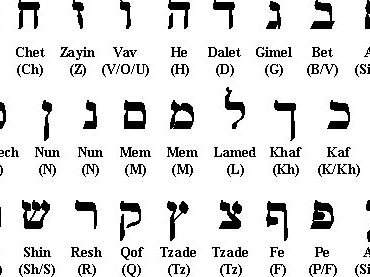
 Warrior, Felt, Undertaker, and other stories