The Primavera offers itself to any number of interpretations. It is, in its own way, pregnant with possibilities. Botticelli lived at the end of one period and the beginning of another. He also worked amongst men steeped in the quest for classical knowledge both mythological and Judaical. Ficino and Mirandola, particularly the latter, studied the Torah and other Jewish texts in their original languages. Fascination with the Madonna and Infant inhabited many minds. Portraits of them at the earliest stages of the Renaissance appeared and dominated the imagination. It is apt and ingenious that Botticelli reinterpreted and deepened it.
The painting, Primavera.4
Paradise is a walled garden in Indo-European. As God expelled Adam and Eve from paradise, Arcadia may be considered to have had walls to keep interlopers out. Arcadia is also paradise, the perfect garden. The Garden of Eden is the place of innocence and the place of potentia. All events of personal and world history have flowed out from it. This Primavera stands in the midst of paradise and mythological figures surround her. They are clustered together with a purpose, and they are placed in a pre-Eden, in the sense that a pre-form exists to inform its form in the world, in a Platonic sense.
Eight figures are standing and one floating in Arcadia or Eden. From stage left to stage right: Zephyr, nymph Chloris, Flora, Primavera, three Graces, Hermes, and Armor above. Primavera, of course, stands in the middle. The meaning of this painting is unclear. ‘The Primavera is probably one of the best known as well as doubtless the most puzzling and disputed of Botticelli’s paintings and its many layers of meaning still have not been satisfactorily explained.’ (P282 Janson) Perhaps its recondite combination of Torah, Classical myth and Plato have escaped notice by most, but not all.
The Primavera has three layers of meaning. Primavera herself intersects the Classical, the Catholic, and Jewish worlds. She occupies the most prominent place to where the viewer’s eye darts. Botticelli coyly leaves her with three veils.
One may start by examining their mythological meanings, as all of them except for Chloris, a nymph, are found in the lexicon of Classical myths. Botticelli worked during the Renaissance, the rebirth of Greek and Roman knowledge. The pantheon of gods and goddesses from the corpus of mythology lays at its foundation. It follows, as he was aware of this body of knowledge, he purposely chose these figures, not only for their comeliness or to balance a painting’s composition. Furthermore, their meanings reveal a stunning consistency. The theme is fertility, that of nature and of humankind.
Venus, the Goddess of Love, or Aphrodite, appears in the center of an orange grove on a meadow of flowers and her blindfold son, Amor, is above her, shooting arrows of Love. A probable model for the visualization of the garden was the poetry of Angelo Poliziano, the Medici court poet, who lauded the Garden of Venus as a place of eternal spring and peace. (P282, Italian)
The Garden of Venus, of eternal spring and peace, is the Garden of Eden before the Fall. Before the introduction of the Serpent, the Garden existed in perfection. As Christianity brings forth the Infant without the complication of the male, so does the creation story of humankind in the Torah render Eve, without the complication of sex. Even before the proclamation of the Immaculate Conception in the 19th century, the peculiar positioning of the Madonna and Child without male counterpart, laid the foundation for the pronouncement of its immaculate nature. There is a tripart intersection between these three worlds.
In Eden God immaculately draws out of Adam’s body the female, Eve, whereas, in the Nativity, the Son immaculately came out of Mary’s body. Athena emerged out of Zeus’ thigh without any feminine interplay. Hera, jealous that she was not made pregnant, sought to do the same with the birth of Mars, and had to ask for Floris’ aid. Floris bestowed Hera a special flower that could convey the ability to give birth parthenogenetically. Floris is placed next to Primavera in Boticelli’s painting.
Hermes has a connection with fertility and all manner of beasts. He is also connected to human fertility. One of his oldest cult-monuments is a phallus, in Hindu myth and worship, the lingam and by suggestion, the yoni. He also occasionally governs the fertility of the earth. His marvelous staff is a magician’s wand, the ithyphallus, that marvelous organ of sperm in potentia. The Italians identified Hermes with Mercurius. (P 145 Rose, Greek Mythology)
The lingam symbolizes the extreme of potentiality. In meditation it is the tipping point that if sustained leads the practitioner into enlightenment. Fleeting is the nature of the mind. Thoughts intrude unbidden and so spoil the quest for perfection. Hermes’ wand on the one side of the painting represents this. He holds up the lingam and looks away from the women to his left. One glance at the diaphanous robes of the Graces would rock that boat. ‘Hermes is the servant of Zeus’ who has conquered all, including all those specks afloat in the consciousness. (P28 Rose)
On the other side on stage left, is Zephyr. He is the rainy west wind, that along with Notos, the south wind, is a kindly breeze of divine origin.(p.59 Rose). His wife is sometimes Iris, the Goddess of the Rainbow, the sign for rain. Moisture with the light, life-giving rain out of the west brings forth the fertility of the earth.
There are two creation accounts in Genesis. The first is found at the very beginning of Genesis. ‘In the beginning God created the heavens and the earth.’ Then follows, from verse 1:2 to verse 2:3 in Genesis, the famous seven days of creation during which on the sixth day He creates the male and the female of mankind. In the fourth verse of the second chapter of Genesis, 2:4, the second creation account begins, during which Adam is created and from him God draws out Eve.
The second creation story in the Torah describes, in the first few verses of the second chapter, a pre-Eden, before the creation of Adam, it is written: Genesis 2:5 & 6: ‘And all the bushes of the field were still to be in the earth and all the grasses of the field were still to bloom. The mist brought to life all the plants. And a mist arose from the earth and watered the face of the earth.’ Antecedent to the creation of Adam is the pre-Edenic world. His creation is the signal for this world of sin precipitant.
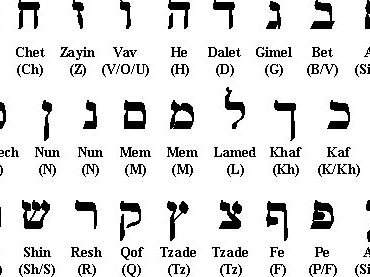
Rashi says about these verses: ‘God brought up the depths and watered the clouds to saturate the dust and to create man. In the second creation story God fashions Adam from the moistened dust’. In delineation of the first creation story with the seven days of creation, a Zaycher and a Nikeva זָכָ֥ר וּנְקֵבָ֖ה are made on the sixth day, the former the male and the latter the female. These two words, Zaycher and Nikeva, denote a pre-existent stage of their creation, brought fully into the world in the second creation story, which is a lyrical story as opposed to the listing of the seven days, and which uses the words ‘ish’ אִ֖ישׁ and ‘isha’ אִשָּׁ֔ה for man and woman. The first creation story of the seven days is the World to Come, the Olam HaBah עולם הבה and the second is Olam HaZeh עולם הזה, This World. In the Jewish context ‘the world to come’ corresponds to a pre-Edenic state or the arcadia of the painting Primavera. This pre-edenic state continues into the second chapter of Genesis, formally starting on the fourth verse of the second chapter, and continuing until Adam is created.
Eros or Armor is the love god connected with those powers which make for moisture and therefore fertility(p27 Rose). Aphrodite is Venus, the Primavera, and is the mother of Eros, a son, also, as he appears in Hesiod, an ancient cosmogonic power, which indeed he continued to be in theological and philosophical speculation.(p79 Patai, Graves) Eros is not merely the child that shoots arrows at lovers, but a power involved in the creation of the world in some contexts. The primeval feminine danced on the waters and was impregnated by the serpent.
The three, Hermes, Zephyr and Eros form a triangle enclosing the feminine figures within. Many painters in the Renaissance used the triangle to focus the viewer’s attention. Zephyr, the west wind, Hermes, the phallus, and Armor, the moisture, form the creative act, as the serpent took the form of the wind, or ruach רוח, for instance, in the first words of creation in the Torah, or in the other creation stories, described above, when the primeval woman danced on the waters and wind uprose and impregnated her. Botticelli frames Primavera with a halo. Tree trunks and the branches and leaves form the halo and her son, Amor, floats directly above her inclined head. His stomach extends toward her and he floats in the dark color of the earth that lay beneath his mother’s feet that forms another or secondary halo directly around her and which also encases him. Primavera stands as a Madonna, the Mother of Christ, in utter serenity, with her right hand extended in blessing and the left modestly holding up her robe. She is looking at Floris who appears to be another version of her. Floris is she who enabled Hera to conceive an immaculate birth. Primavera herself conceived the Christ child immaculately. In Eden, Eve was conceived immaculately, wherein the painting is located.
The three males surround the six females, in two groups of three. The three Graces form one such group and Primavera, Floris and Chloris, the other. The three graces are as one person, or three parts of one being, and Primavera, Floris and Chloris have identities that flow into one another, rendering them also three parts of one being. Amor points his arrow at one of the Graces who has her back toward us and who in turn gazes at Hermes who is looking up toward his wand. This amorous Grace is surrounded on either side by her sister Graces who have one’s right hand and the other’s left hand joined above. All of the hands of the Graces are so joined, only this pair is held above the center sister’s head. Floris is the only figure that looks outward toward the viewer and who looks as if she will next step out of the picture. She is the center of the painting or the part of it thrust forward, even though Primavera is at the actual center of the painting’s field. Floris has her right hand in the folds of her skirt with her left hand holding it up, as does Primavera. Floris is spreading flowers on the ground. The flower is the means by which she manifested the virgin birth for Hera, and which here symbolize the blessings of Primavera that she extends to humanity.
Iris is the Goddess of the Rainbow and sometimes wife of Zephyros, otherwise known as the ‘rainy west wind’. Iris is once or twice said to be the mother of Eros. Eros is the love-god connected with those powers which make for moisture and therefore fertility. Iris is the rainbow, the sign for rain. Zephyr is the rainy west wind. Eros is feminine in this case and is moisture and rain.(P27 Rose) ‘The south and the west winds, Notos and Zephyros, are kindly breezes and of divine origin’. (P59 Rose) Zephyr: ‘A mild, soft, gentle breeze.’ (Oxford English Dictionary)
The Charites are the Graces. Aphrodite or Primavera is associated with the Graces. They are old goddesses of vegetation ‘who make the ground delightfully productive’. There is a constant association of the pair Venus/Cupid in literature. Aphrodite is the goddess of love, beauty, and marriage. (P124, Rose) The Madonna and Child are not the first expression of creation, though a study of the Renaissance oeuvre of painting and sculpture might persuade otherwise. All of Christianity is compressed into the life of the Savior, his years on earth. It trains the eye on this pivot on which all of history turns. However, Botticelli uses this pairing of Madonna and Child to broaden its applicability. It is radical in this sense, and he probably was moved to disavow it during the Savaranola period of Catholicism. Primavera or The Madonna is an adaptation of Ishtar. In Hesiod, Eros or The Child is her son, (P79, Raphael, Patai) Furthermore, Ishtar is the Mother of All Living Things or the Creatrix. (P118 Raphael, Patai)
Flora comes from Ovid. Hera was angry that Zeus bore Athena without a mother. She wanted to work a parallel miracle herself. She met Flora and told her of her plight. Flora gave her a certain flower, magical, and by its touch made Hera pregnant, and Mars was born. Flora is the goddess of flowering or blossoming plants.
In the painting The Birth of Venus Zephyr is blowing as the wind does and pushing Chloris into Flora, who does not seem to notice what is happening. Zephyr is apparently transforming Chloris into Flora (P 540 Janson). In The Birth of Venus (1485), another and companion painting by Botticelli, Zephyr and Chloris(Flora) aided Venus’ movement toward the shore. (ibid P540). So Chloris is Flora. And in Botticelli Zephyr and Chloris are linked either by pushing or in embrace. In the Birth of Venus the flower clad woman waiting for Venus to approach to clothe her could be Flora. She probably is Flora, as they are one, and Zephyr somehow is part of that. He is the rain and she is the flowers. They go together, rain in April and flowers in May.
The Birth of Venus
It has been remarked that Venus’ posture is very like that of Mary. She and her child often are the subject of paintings during this period. Madonna and the infant Jesus were the preoccupation of the early Renaissance since at least Cimabue’s Madonna Enthroned, ca. 1288-90. Florence, Italy. The Madonna is here sitting on a throne, the infant Jesus is in her left hand and she is pointing to him and her head is inclined to the right. In many of the paintings leading up to the Primavera in 1482, just before the High Renaissance would begin, she is depicted in the same posture, either leaning to the left or the right and pointing with her hand. In the Primavera Venus assumes that same swaying posture and she is pointing with an open palm, but it is very like when she is pointing with her hand. Her child, Eros, is floating right above her head.
Madonna Enthroned
The Madonna is the mother of God, no less. She is the Creatrix. She is the most fertile of all beings since she bore God. She is therefore eternal. In this painting the Primavera she is standing in her sacred grove. The Biblical account of the creation includes in its first iteration, the seven days of creation, and in the second, the Garden of Eden. The Madonna and Eve are both mothers of the world, and in a sense, the same being. In the penultimate line of the third chapter of Genesis, 3:29, Adam gives his wife the name Chava, and explains it by saying, because she is the mother of all living beings. וַיִּקְרָ֧א הָֽאָדָ֛ם שֵׁ֥ם אִשְׁתּ֖וֹ חַוָּ֑ה כִּ֛י הִ֥וא הָֽיְתָ֖ה אֵ֥ם כׇּל־חָֽי
‘Then Adam called the name of his wife Chava since she was the mother of all life.’
Things exist, and if so, they exist in potentia. In the Platonic sense, there exists the idea of the chair, and then every instance of a chair in the world. In a similar manner, the sacred grove of the Primavera is the Garden of Eden in potentia. It has begun to burst forth, but will not achieve its fullest expression until the Christ is born. In the Renaissance, the admixture of Antiquity with the Creatrix was hinted at, with the increasing rediscovery of ancient statues and the use of perspective. Before the Fall, before even Adam and Eve, was the Creatrix in her sacred grove. Botticelli expresses this with his figures drawn from Greek mythology, all of which symbolize fertility. April showers bring May flowers, Zephyr and Floris. The Graces, the goddess of vegetation, Hermes, the phallus. Venus is bursting forth with the most fabulous expressions of fertility, her very nature, that will find its final and most splendid iteration with the birth of Jesus.
The oranges in the Grove run counter to this argument. Eve gave Adam an apple. However, the Biblical account names no particular fruit, though a fruit is mentioned by Eve in her encounter with the Serpent. No inference can be gathered from the second creation account that it is an apple or any other fruit. The oranges in the Primavera signal that this sacred grove is Eden in potentia. In Hebrew, the two words ‘apple’ and ‘orange’ are very similar. The first is ‘tapuach תפוחי and the second is ‘tapuaz’ תפוז an abbreviated form of ‘tapuach zahav’ תפוח זהב, the ‘golden apple’. Botticelli might very well have been cognizant of all of this rather simple knowledge, since he was in the same circle as Ficino, Mirandalo, and Poliziano.
Marsilio Ficino lived between 1433 and 1499. He knew both Poliziano and Giovanni Pico della Mirandola (1463-1494). The two latter men were possibly lovers. Poliziano learnt the rudiments of philosophy from Ficino and lectured at the Platonic Academy in Careggi Villa that was under Ficino’s leadership.
Mirandola was the founder of Christian Kabbalah. There still persists the idea of a practical Kabbalah that some souls study even today. In the Renaissance in Italy Mirandola and others availed themselves of rabbis with whom to learn. Their intent was to study Abraham, the first of the patriarchs, Abraham, Isaac and Jacob. They considered Abraham to have been an arch magician. They wanted to control nature and human nature by manipulation of the Hebrew letters. The story of the Golem illustrates this. The word for ‘truth’ in Hebrew is ‘Emet’ אמת and is written on the Golem’s forehead’. After reciting some prayers and mixing water and the earth from which Adam was made, a sentient being is created. He lives until the word for ‘truth’ has its first letter ‘aleph’ removed. Then the word becomes ‘death’ or ‘met’ מת in Hebrew. These scholars felt the first book of the Torah’s five books was the most important. Mirandola studied Hebrew and Arabic in Padua, Italy, with Elia del Medigo. He translated Hebrew manuscripts into Latin for Mirandola. His tutor in Kabbalah was Rabbi Johannon Alemanno (1430-1510). Mirandola believed an educated person should study Hebrew and Talmudical sources.
Lorenzo Medici employed Poliziano as tutor to his son. He became a part of the Medici household. Lorenzo envisioned a sort of ‘vernacular classicism’ modeled on literary values like grace, elegance and sweetness, gravitas imbued with philosophical import.(P65 Thesis) Lorenzo was involved in the arts and the study of Platonism. If Poliziano was with Mirandola then his influence probably entered into the discussions of art and philosophy. Furthermore, Lorenzo had Jews in his financial life. Bernardo de Feltre, a Franciscan preacher, admonished against usury and advocated expulsion of the Jews from Florence. He especially thundered against Manvellino, a Jewish moneylender, who played an essential part in the Mendician economy. Additionally, at that moment, Lorenzo’s finances heavily depended on loans handled by Jews. (P53 Thesis).
So there were Jews and one who loved Jewish knowledge, Mirandola, in Florence. Sandro Botticelli knew Poliziano and probably the others, Mirandola and Ficino, and learnt from them. It is not going too far, I believe, to suggest that his painting, Primavera, completed before the mania created by the Dominican Savaronela, who made others believe that in or around the year 1500 the Day of Judgement would occur, would include some esoteric knowledge coming from his discussions with these men. Christian Kabbalah and magic are esoteric subjects meaning that they are revealed to the unknowing only in hints. Nothing is said plainly. Double entendre is key.
Ficino taught his own Platonic philosophy: ‘Platonic love in which human love is the first step in the contemplative ascent toward enjoying Beauty of the divine.
Furthermore, Ficino’s philosophy influenced Poliziano’s poetry, in particular, the Stanzas which includes the Rusticus, and this in turn influenced the work of Botticelli. Scholars pick out a phrase from Octave 68 of the Rusticus, ‘Where lascivious Zephyr flies behind Flora and decks green grass with flowers for Primavera.’ From this line, it is said, Botticelli created the composition of the painting, Primavera.
At the end of the 15th C. there abounded great fear and anticipation of the End of Days and Judgement in Florence and elsewhere. Savaronala, a Dominican monk, urged Florence to burn all luxuries in the ‘Bonfire of the Vanities.’ As an example: ‘Fra Bartolommeo (1472-1517) was one of the painters who assimilated the methods of Leonardo, Michelangelo and Raphael with particular sensitivity. A stay in Venice in 1508 also enriched the spectrum of his palette. Torn in Girolamo Savonarola’s day between the sacred and the secular life, he destroyed all his works of a secular nature and became a Dominican monk.’ (P331 The Art of the Italian Renaissance)
Botticelli himself believed he was living in the age of the second ‘woe’ in the eleventh chapter of Revelation when the courtyard of the Temple was left to heathens for three and a half years, and this will be followed by the fulfillment of John’s prophecy in the twelfth chapter, that the apocalyptic woman will appear who is about to give birth and who will then flee from the Devil.'(P284 ibid) Mary was this woman, the Madonna and child. In 1498 many artists including Botticelli renounced heathen art and dedicated their lives to religious paintings.
Three phenomena characteristic of the early stages of the Renaissance idea: a concern to master the technique of perspective; that fact that we have here an artist who like many other Renaissance artists was not just a painter but a talent in other art forms was well; and finally the quasi-ennoblement of the artist, as his status was raised from that of craftsman to a par with thinkers and philosophers. (P352 Italian)
….Of course art was to remain at the service of politics and religion, to fulfill the purpose of social transformation, of the natural desire for ornament and of the symbolic enrichment of theological and philosophical representation. (P352 Italian, continued)
In the popular imagination since the Renaissance the devil proffers an apple to deceive Eve in the Garden of Eden. However, in the second creation account there is no devil or Satan, though some assert that the Serpent is he. In Job it explicitly names Satan as the one who suggests to God that He should test Job. In the Tikunay Zohar there is an interpretation of this encounter between Eve and the Serpent wherein Satan sees Adam studying Torah, becomes jealous, and sets upon Eve in order to introduce death into the world, by manipulation of the letters of the verses.
There is much confusion about this fruit. Translations of the Torah (Biblical Hebrew) into Greek or Latin(the Vulgate) are fraught with problems.
In the Vulgate, the Latin translation of the Torah the phrase: ‘Tree of Knowledge of Good and Evil’ is translated as ‘de ligno autem scientiae boni et mali’. The Latin for the phrase ‘of evil’ is ‘mali’. ‘Mali’ is the genitive case of the Latin word ‘malum’, in the nominative case, ‘evil’.
The confusion arises due to the Latin word for ‘apple’, which is also ‘malum’. They are homonyms. Some could conflate these two ideas:’evil’ and ‘apple’. It could be translated as ‘Tree of Knowledge of Good and Evil/Apple. ‘Evil’ and ‘apple’ become thus joined, and one means the other.
The Targum is the Aramaic translation of the Torah, the Prophets and the Histories. At the time of the destruction of the second Temple in 70 A.D. Jews generally spoke Aramaic. The Old Testament is the Torah, and the New Testament is the Gospels, generally speaking. The original language of the Torah, the Prophets and Histories is Hebrew. At around that time period the rabbis produced an Aramaic translation to aid in understanding the text for the common people. Today editions of the Torah often contain the Hebrew and the Aramaic versions. The Talmud is also written in Aramaic.
The ‘Shir HaShirim’ or ‘Song of Songs’, in verse 7:9, says: ‘tapuach deginta dieden’ or ‘the apple of Eden’. ‘Tapuach’ is the Hebrew word for ‘apple’. Interestingly, the word for ‘orange’ in Hebrew is ‘Tapuach Zahav’ or ‘Tapuaz’. Scholars who translated the Song of Songs into other languages, Latin or English, for example, passed this connection between Eden and ‘apple’ into other translations of Genesis, where this drama between Eve and the Snake unfolds.
During the time of the Second Temple in Jerusalem, when Jesus lived, the two languages the Jews spoke were Aramaic and Koine Greek. On the one hand, Aramaic was so common that when Ezra returned to Israel from Babylon in 572 BC, wherein the Jews had been exiled, he read the last book of the Torah, Deuteronomy, in Aramaic, to the Jews who came to hear him. Also the Torah was translated into Aramaic and is printed alongside the Torah in complete editions with Rashi and other commentators. The Hebrew, and Aramaic translations of the encounter between Eve and the Snake does not include any mention of a particular fruit, not even an apple. Verse 3:2 וַתֹּ֥אמֶר הָֽאִשָּׁ֖ה אֶל־הַנָּחָ֑שׁ מִפְּרִ֥י עֵֽץ־הַגָּ֖ן נֹאכֵֽל ‘Then the woman (Eve) said to the Serpent from the fruit of a tree in the garden we may eat.’ In particular, here Eve mentions the word for fruit,פְּרִ֥י , and it is not even certain she is referring to a fruit one can eat. It might be the fruit of an idea or wisdom one acquires from embarking on a new path to higher understanding. In any case, she mentions no kind of fruit.
However, as mentioned above, once a reference was made in the ‘Shir HaShirim’ or ‘Song of Songs’ to an ‘apple’ and the ‘Garden of Eden’, all hats were off.
Song of Songs 2:3 ‘Like an apple in the trees of the forest so is my dearest among the children I enjoyed and I sat in its shadow and from its fruits sweet to my mouth I tasted.’
‘Oranges or golden apples in lockets of silver is a word fitly spoken.’
In Song of Songs an apple is frequently spoken of. Here is one example of many. And in Proverbs there appears ‘oranges’ otherwise known as ‘golden apples’. In the painting Primavera the fruit of the trees looks like golden apples or oranges. Probably Botticelli knew of Proverbs and knew of this equivalence.
Koine Greek is the language of the Gospels. That is the other language the Jews spoke at that time. ‘Koine’ means ‘simple or common’ as apart from Platonic Greek or Homeric Greek. The editors of the Gospels published them in Koine Greek. Once a translation of the Torah into Greek under the Ptolemies of Egypt by seventy rabbis was made, the idea of translations as accurate sources from which to understand the Torah became validated. The fact that the Torah was translated into Aramaic, a language written with Hebrew letters, lent the idea of translation even more credence. Misunderstandings crept into scholarly and later artistic works.
Another pathway that would suggest it was an apple comes from the Torah account in Genesis of Isaac’s blessing of his son Jacob, and a comment on a line from that story by Rashi. Isaac was nearly blind, and didn’t recognize that Yakov had taken Esau’s place for the blessing. Isaac smelled the fragrance of Esau’s garments (which Jacob was wearing to fool his father) and blessed Jacob. Isaac said, “See, my son’s (Esau’s) fragrance is like the smell of the field blessed by God.” (Gen. 27:27) וַיִּגַּשׁ֙ וַיִּשַּׁק־ל֔וֹ וַיָּ֛רַח אֶת־רֵ֥יחַ בְּגָדָ֖יו וַֽיְבָרְכֵ֑הוּ וַיֹּ֗אמֶר רְאֵה֙ רֵ֣יחַ בְּנִ֔י כְּרֵ֣יחַ שָׂדֶ֔ה אֲשֶׁ֥ר בֵּרְכ֖וֹ יְהֹוָֽה.
Rashi comments on this particular line: He quotes a midrash that says that the scent Isaac detected was that of the Garden of Eden. Rashi cites a comment about this field blessed by God from the Talmud, Taanit 29b, which says, “the field referred to is a tapuach orchard.” ‘Tapuach’ is the word for ‘apple’. One could draw from this that the tree was an apple tree.
However, though there may have been apple orchards in Eden, it does not necessarily follow that the Tree forbidden by God was also an apple tree. An important rabbi, the Gra, says that Isaac’s blessing of Jacob happened on Rosh Hashanah. The midrash quoted by Rashi is one of the reasons for the custom of dipping an apple in honey.
The Haggadah is the book read during Passover. It recounts the deliverance of the Jews enslaved by Pharaoh. In the Prague Haggadah published in 1527, there is an illustration of Adam and Eve each holding an apple. Any Christian who saw that illustration might conclude that it was an apple, since the Jews, if any one group, ought to know.
The understanding that The Primavera is about fecundity is commonplace. This essay has sought to show that Botticelli took great care to include figures from Greek mythology that deepen that interpretation and open the pathway to a more comprehensive view. The inclusion of Floris who aided Hera to give birth to Mars without consorting with Zeus or any other male, Mary who gave immaculate birth to Jesus, and Eve who was born immaculately as well. Primavera stands in for all of them. She is placed in a grove, perhaps, the Garden of Eden, but that Garden before the creation of Man. This is the time of the greatest proliferation of life without sin. Botticelli carefully chose even the color of the apples to show that this is the pre-Eden, the first creation story.
Sources:
Note: Information regarding the apple from Ari Z. Zivotofsky, professor of brain science at Bar-Ilan University in Israel, in an article in the Summer 2017 issue of Jewish Action: Jewish Law- What’s the Truth About…The Apple in the Garden of Eden.
Robert Graves and Raphael Patai, Hebrew Myths: The Book of Genesis, 1968
Rolf Tomain, Editor, The Art of the Italian Renaissance, 2005
Francesco Caruso, Philology as Thanatology: A Study on Angelo Poliziano’s Intellectual Biography, Baltimore, MD, September, 2013
A zen master poked his chief student, Fred Figureout in the mouth and asked, “What is that for?” Fred stared at his teacher’s face and asked in return, “What’s what for?”
Do they have kazoos in Kazooland? Do they have a rich fund of nothingness in Richland? One day the glass man from Glassylvania tied his horse to a limp hand of a cowboy and reached zenith in Zenithland. “Whadja do ‘at fir?” asked the girl from Girlyland. “Don’t know now, Girl, but wouldja believe this?” He poked his hand into the air and located Locationville. “My Dad had the itch for a woman from Paris.”
An Itch for The Woman from Paris
She wore a face like France
Had a bosom like Seville,
And the loners gave her roses
When they felt like it.
Who was the big daddy drinking on Sunday
Hitting her like an old rump?
A zen master walked into the room and asked, “Can you tell me the time?” “I have to find my shoes.” “Why, Fred, there is no beginning or end.” “I don’t go anywhere without my shoes.”
“I need some strong words, you ruffians of the dictionary!”
Words seethed, boiled and frothed. Few glanced at the clock as it stroked the hour and soaked finely crusted croissants in dregs of pasty tea. All lifted snouts a startling degree.
Chief among them, one toed Preposterous, teetered on a pediment. Pages, letters, papers, refuse, detritus, perfume, puffery, attendant mummification, and finally corpses, scattered in mayhem.”This is Preposterous!” he shouted over the roar that roared and roared and would not expire. “What would C. T. Onions, revised and edited by, interject? Having last that should be first; inverted in order. Now rare, 1552,” intoned in loud voice Preposterous, in Onions’ stead


 Warrior, Felt, Undertaker, and other stories